

In the mountainous lands of the Himalayas, respect for women is greater than in other parts, even so, Throughout history, Buddhist nuns have been treated very differently from male monks..
WITH (INDIA) 07/05/2017 10:18 Updated: 08/05/2017 13:20 NEREA LESSER BONILLA
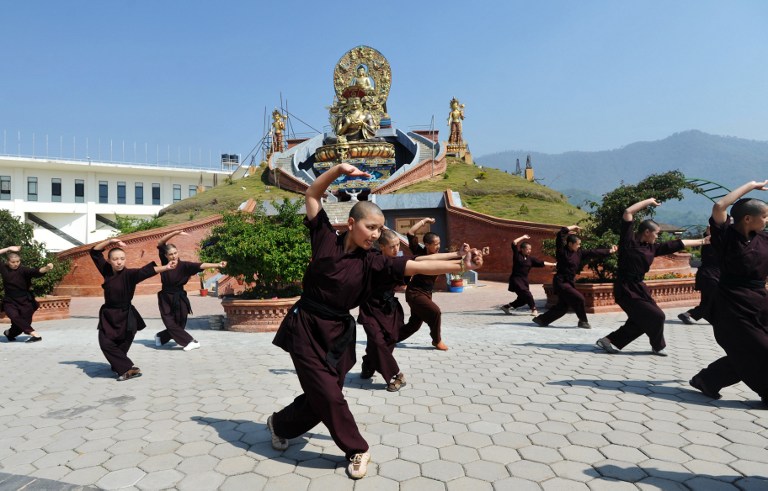
Feminist nuns, kung fu nuns, Himalayan nuns… Many names have been used to define these women., of Indian origin, does not smoke, Tibetan or Bhutan. Surrounded by the highest peaks in the world, Buddhist nuns in the Himalayas are completely changing the situation that many others before them had to endure.
Hidden in the far northwest of India, in a vast windswept stone desert, The plateau that houses the Ladakh region is located within the Indian state of Jammu and Kashmir. To the east it shares a border with Pakistan and to the west with the (officially) Tibet Autonomous Region. From the fifth to the fifteenth century, Ladakh was an independent kingdom within Tibet, period in which many monasteries were built in the region.
In Ladakh, as in the entire territory surrounding the Himalayan mountain range, Tibetan Buddhism is practiced. They practice it in Nepal, Butane, India and Tibet, besides in Mongolia.
In the lands surrounding the mountain range, respect for women is greater than in other parts (the rest of India for example), Yet Buddhist nuns have been treated very differently from monks.. They enjoy great social consideration. Thanks to the ceremonies and prayers they perform, they earn enough to support themselves and, besides, They receive the money that travelers and tourists pay to visit the temples. The nuns, however, They have been in charge of cooking and cleaning for decades. They were domestic workers and worked in jobs as hard as road construction..
A rigid hierarchy with monks in charge
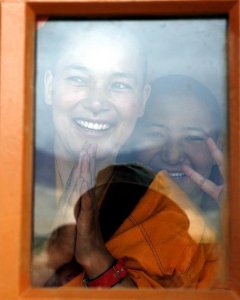
(PHOTO) Two nuns greet through a window at the Naro Photang temple in the city of Shey. – AFP
Dr. Kim Gutschow speaks at Being a Buddhist Nun: The Struggle for Enlightenment in the Himalayas (Be a Buddhist Nun: The fight for Enlightenment in the Himalayas) about the lives of Buddhist nuns and how gender and sexuality have been and are the basis of the differences between monks and nuns in India. In his book he describes a rigid hierarchy in which monks are in charge and enjoy great power and prestige.. The nuns must sit behind them at meetings and are relegated to domestic tasks such as collecting dung or wood to use as fuel and heat the entire community during the harsh winter in Ladakh..
Towards the year 1994, The situation of the convents and nuns had worsened considerably. Moral and financial support from neighbors ceased, to which is added the lack of respect and status on the part of monastic institutions or the community.
Due to the lack of convents in which to reside and study, The nuns were forced to live with their family, work at home and in the field. So, the number of ordained women fell sharply: in 1994 were around 300 nuns in the Ladakh region. These nuns were already very old and, for having served his family for most of his life, illiterate. At this time it seemed that the region was about to lose a significant part of its culture.: the shanga of nuns, the community.
The precepts of the Buddha
“In his time, the Buddha did not want women to become nuns. Only after the aunt who raised him asked him to (his mother died very soon) accepted, but only if they complied with a series of additional precepts”, account Marlies Bosch founder of Dutch Foundation for Ladakhi Nuns (Dutch Foundation for Ladakh Nuns). “Over the next thousand years the direct lineage of ordination was broken and the nuns of Ladakh were never again able to fully develop.”. The neighbors looked at them with contempt and, although they were allowed to wear red, "They were not taken seriously".
"La desigualdad se debe principalmente a los distintos roles de género creados durante siglos en la sociedad"
“Inequality is mainly due to the different gender roles created over centuries in society.”. For a long time, women were told that they were less capable, less wise, less efficient and who had fewer rights”, count the twelfth gyalwang drukpa, leader of the Drukpa lineage (or the red hats), branch of the Kagyu school of Tibetan Buddhism in Nepal and the Himalayan regions.
The Gyalwang is known for its humanitarian work, ecological and its work in defense of gender equality. He believes that to social discrimination we must add the loss of self-confidence that many women have suffered.. “If we go back to the roots of Buddhism, Women are highly respected and play an important role in spiritual matters. The woman symbolizes wisdom and the masculine energy symbolizes compassion.. If we do not have both, there would be no progress for anyone.. Unfortunately, women are often condemned to oblivion, They are not offered the same opportunities. That's why we're trying to do something about it.".
Dr. Tsering Palmo and change
It was in 1995 when the 4th edition of the Sakyadhita International Conference for Buddhist women was held in Leh, capital of Ladakh. Thanks to the event, awareness was raised among the local population and among the monks: women suffered an unfavorable situation that had to be changed.
One of the speakers at the conference was Dr. Tsering Palmo, who moved the attendees and became on the front line in the fight to improve the living and study conditions for the religious. “Dr. Tsering Palmo was the first educated and amchi nun (Tibetan medicine doctor)”, Mariles account. and in 1996 She was responsible for founding the LNA, Ladakh Nuns Association (Ladakh Nuns Association).
Palmo says they are working to end the deep-rooted role of maid imposed on nuns.. “We are working hard, providing facilities for modern and monastic education in the path of Dharma, means of subsistence, refugio, leadership training, etc”.
Among many other things, the LNA has managed to create in 21 years 11 primary schools. The centers are located within the convents in which more than 12 nuns, qualified teachers, they teach the classes. They have opened a pharmacy and 8 years they opened a clinic where they provide medical care to neighbors. She further , 9 nuns have completed their studies in Tibetan medicine.
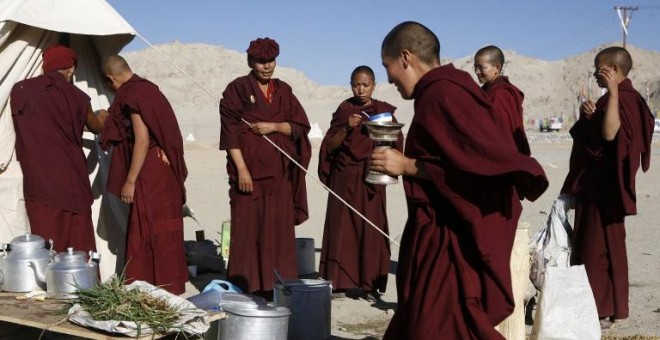
Buddhist nuns prepare tea in the Indian region of Ladakh. – AFP
"Slowly, citizens begin to support their daughters when they decide to convert. “The health project we carry out connects us with the community in which we live and the public is delighted to receive treatment under the care of our nuns.”, explains Dr. Palmo.
Finally the nuns are receiving support. Does 5 months, 20 of them received for the first time the title of Geshemas or doctors of Buddhism, which is obtained after 21 years of study. A title that until now was granted only to men.
The monks and monastic centers are very receptive and thanks to their own actions the nuns gain more and more respect in the community.. “The lamas and monasteries are happy to see the change. The Dalai Lama and other teachers fully support us.”, indicates span.
500 Kung-fu nuns cross the Himalayas on bicycles
The gyalwang drukpa witnesses how even the least confident nuns begin to feel more confident through education and spiritual achievements.. The biggest challenge is to maintain the change and continue raising awareness. She further , The nuns want to receive training to help in natural disasters.
“Praying is important, But it's not enough.". In the Drukpa order of Nepal they believe that it is best to actively help those who need it. “Knowing what is happening and serving the rest of the people by being present is very important”, they point out.
They know that it is also important to lead by example, That's why they traveled last summer by bicycle and, not for the first time, more of 4.000 kilometers. From Kathmandu to Leh and back, 500 Drupka nuns dressed in red jerseys and riding mountain bikes set out to raise awareness among residents about gender discrimination. “On the way we stopped to perform pujas (religious rituals) and prayers. “We try to spread a positive message regarding gender equality and an eco-friendly lifestyle.”.
"Rezar es importante, but it's not enough"
In addition to cycling, The nuns are known for their daily kung-fu training and practice at the convent. To 2017 They plan another yatra, the pilgrimage, on bicycle. This time they are thinking of crossing India from north to south.
Meanwhile, nuns in Ladakh are busy receiving health training. At least 5 Convents will open new clinics to help the local community and nuns who are studying outside the region will return to train others. “The most important challenge is the lack of funds, since we depend completely on donations to maintain education, healthcare, administrative tasks, etc”, recognizes Tsering Palmo. They will try to solve the problem by teaching how to knit, paint and sculpt the nuns to sell the objects in their own stores.
The Nyerma convent, where Mariles Bosch and the Dutch Foundation for Ladakh Nuns work, generate income through a guest house 12 bedrooms. “Volunteers take care of the house in summer, but the nuns will soon know how to run the establishment on their own. Guests can observe the convent's daily prayers, and they love interacting with the guests”.


