

Buddhism expanded beyond the borders of India since an early time. Russia arrived from the Mongols and Tibetan Lamas in the seventeenth century. After more than four centuries, It is currently considered one of the country's traditional religions, along with Christianity, Islam and Judaism.
During the Tsarist era, Buddhists enjoyed great appreciation and respect for the authorities for their wisdom and pacifist attitude. But the situation changed during Soviet periods. After numerous persecutions, Stalin officially declared in 1941 that Buddhism in the USSR had eradicated.
But in 1945, A delegation of muriatural lames that miraculously survived the persecutions addressed Kremlin with the request to return to his people the teachings of Buddha.
The request, strangely, It was accepted and in the heart of Siberia, a 4.000 kilometers of Moscow, I am not buriat, Ivolguinski Datsan opened, A place of study of Medicine and Tibetan Philosophy, that worked as a restricted monastery. Is located 25 Kilometers of the capital, Ulán-Audé, In a picturesque Valle del Río Ivolga.

This monastery and Center for Buddhist was founded on 1945, In the middle of the Stalinist era.
The place was not chosen as a place of deportation but corresponded to a traditionally Buddhist area and still today, That unique center in the USSR, It is still one of the most important Buddhist places in Russia.
The name of the monastery in the Buriata Language (Mongol town) It can be translated into Spanish as “the monastery, where the teaching wheel rotates, Full of joy and brings us happiness ".

Ivolguinski Datsan has a Tibetan Buddhism Studies Center.
During the Perestroika a time of opening began and Buddhism expanded by places that had had that tradition: Buriatia, Kalmukia and Ten. She further , In the European part of the country, More centers began to open, But this time after passing through the western sieve, which is still ironic. Although it is not known exactly, It is estimated that there are currently around 3 Millions of Buddhists in Russia.
Thanks to religious freedom and the roots of Buddhist traditions in Buriatia, The monastery has grown up. It has 8 buildings, Among those who are temples, a university and a library.
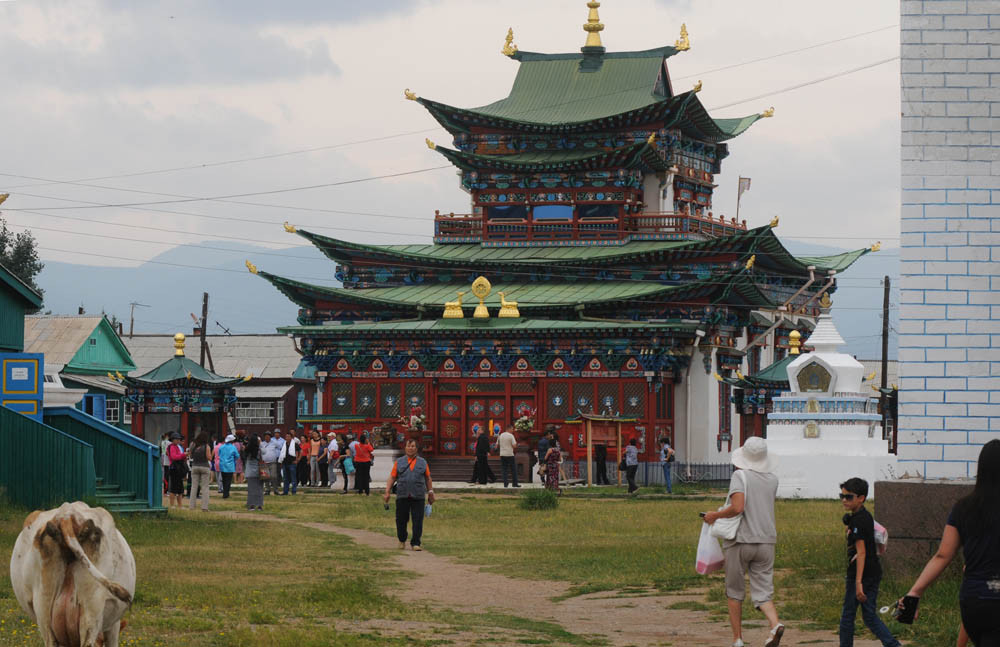
Buriatia is a place of Buddhist tradition. In addition to tourists, local inhabitants approach the center.
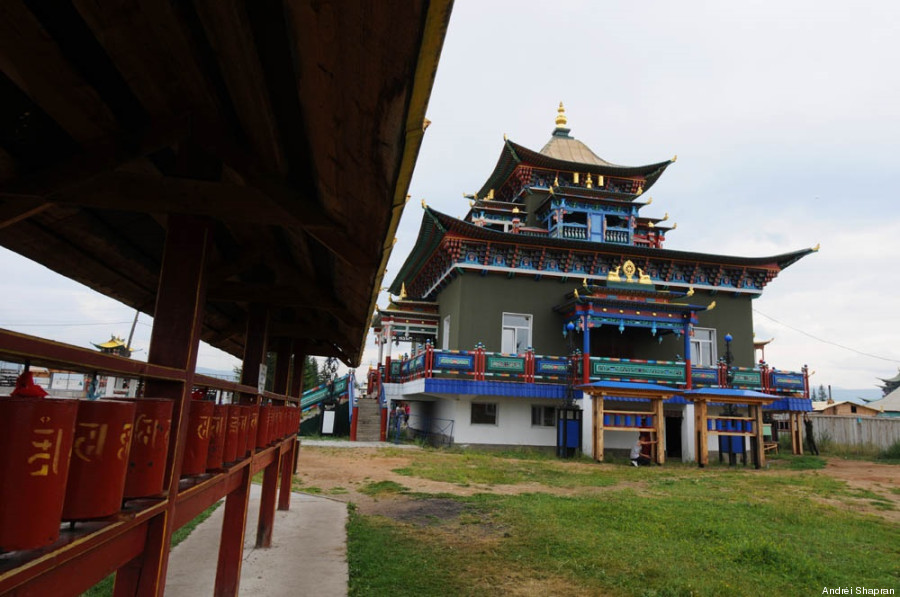
After the fall of communism came a period of religious freedom and Ivolguinski Datsan expanded.


