

22/09/2016


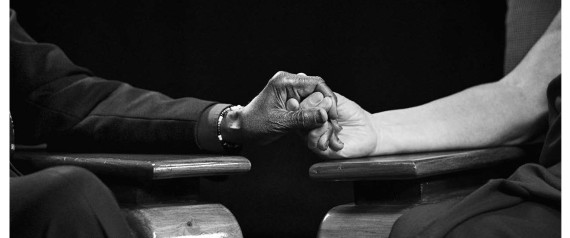
In April 2015, His Holiness the Dalai Lama and Archbishop Desmond Tutu met in Dharamsala (India) to talk about joy. 'The Book of Joy' [The book of joy] It is now on sale and recounts this conversation that lasted a week. For more information visit bookofjoy.org or search the hashtag #sharethejoy on social media.
"Muchos de nosotros nos hemos convertido en refugiados", The Dalai Lama tried to explain. "Hay muchas dificultades en mi país. When I only focus on that, me preocupo", he stated while making a small circle with his hands. Next, He separated his hands and opened the circle. "Pero, when I look around the world, I see that there are many problems, even within the People's Republic of China. For example, China's Hui Muslim community has many problems and suffers a lot. And outside China there are many more problems and much more suffering. When we see these types of things we realize that it is not just us who suffer., so do many of our brothers and sisters. If we see an event from a broader perspective, reduciremos la preocupación y nuestro propio sufrimiento".
I was left speechless by the simplicity and depth of what the Dalai Lama said.. It was very far from don't worry, be happy from the popular Bobby McFerrin song. It was not a denial of pain and suffering, but of a change of perspective - from ourselves to others, from anguish to compassion, to see that other people also suffer. What is exceptional about the Dalai Lama's words is that, when we recognize the suffering of others and realize that we are not alone, our pain decreases.
Many times we find out that something bad has happened to another person and that makes us think that our situation is better.. But that's different from what the Dalai Lama was doing.. He was not comparing his situation to that of others., What he did was unite his situation with that of others, expand his identity and be aware that he and the Tibetans were not suffering alone. Realize that we are all connected - whether Tibetan Buddhists or Hui Muslims- makes empathy and compassion born.
Me pregunté si la capacidad que tiene el Dalai Lama de cambiar de perspectiva podía tener algo que ver con el dicho "el dolor es inevitable; el sufrimiento es opcional". ¿It is truly possible to experience pain - from a wound or from an exile- without suffering? There is a sutra, or a lesson from Buddha, he Sallatha Sutta, que distingue entre los "sentimientos de dolor" y el "sufrimiento que se obtiene como consecuencia de nuestra respuesta" to the pain: "Cuando siente dolor, the common person without preparation grieves, cry, she laments and is dismayed. Feel two pains: one physical and one mental. It's like they were going to shoot a man with an arrow and, right after, le dispararan con otra para que sintiera el dolor de dos flechas". It seems that the Dalai Lama was implying that, by shifting to a broader, more compassionate perspective, we can avoid the worry and suffering of the second arrow.
"Y hay otra cosa", continued the Dalai Lama. "Todos los acontecimientos tienen diferentes aspectos. For example, we lost our country and became refugees, but that same experience gave us new opportunities. Personally, I had more opportunities to meet different people, with different spiritual practitioners like you or with scientists. These opportunities presented themselves when I became a refugee. If I had stayed in the Potala, in Lhasa, would be in what is normally described as a gilded cage: the lama, el sagrado Dalai Lama". As I spoke these words, I was sitting with a rigid posture, like when he was the cloistered spiritual head of the Forbidden Kingdom.
"Así que, personally, I prefer these five decades of refugee life. It is much more useful, there are many more opportunities to learn and live life. That's why, if you look at it from a perspective, pensaremos 'qué triste' o 'qué mal'. But if that same event, that same tragedy, seen from another perspective, we see that it has given me new opportunities. It's wonderful. That's the main reason why I'm not sad or moody.. There is a Tibetan saying that says: 'Tu país es ese lugar en el que tienes amigos y tu hogar es ese lugar en el que recibes amor".
It's fasting fue publicado originalmente en 'The WorldPost' and has been translated from English by Irene de Andrés Armenteros.
Follow His Holiness the Dalai Lama on Twitter:www.twitter.com/dalailama


