

Tibetan refugees in Spain tell how they fled the repression they still experience today and warn China.
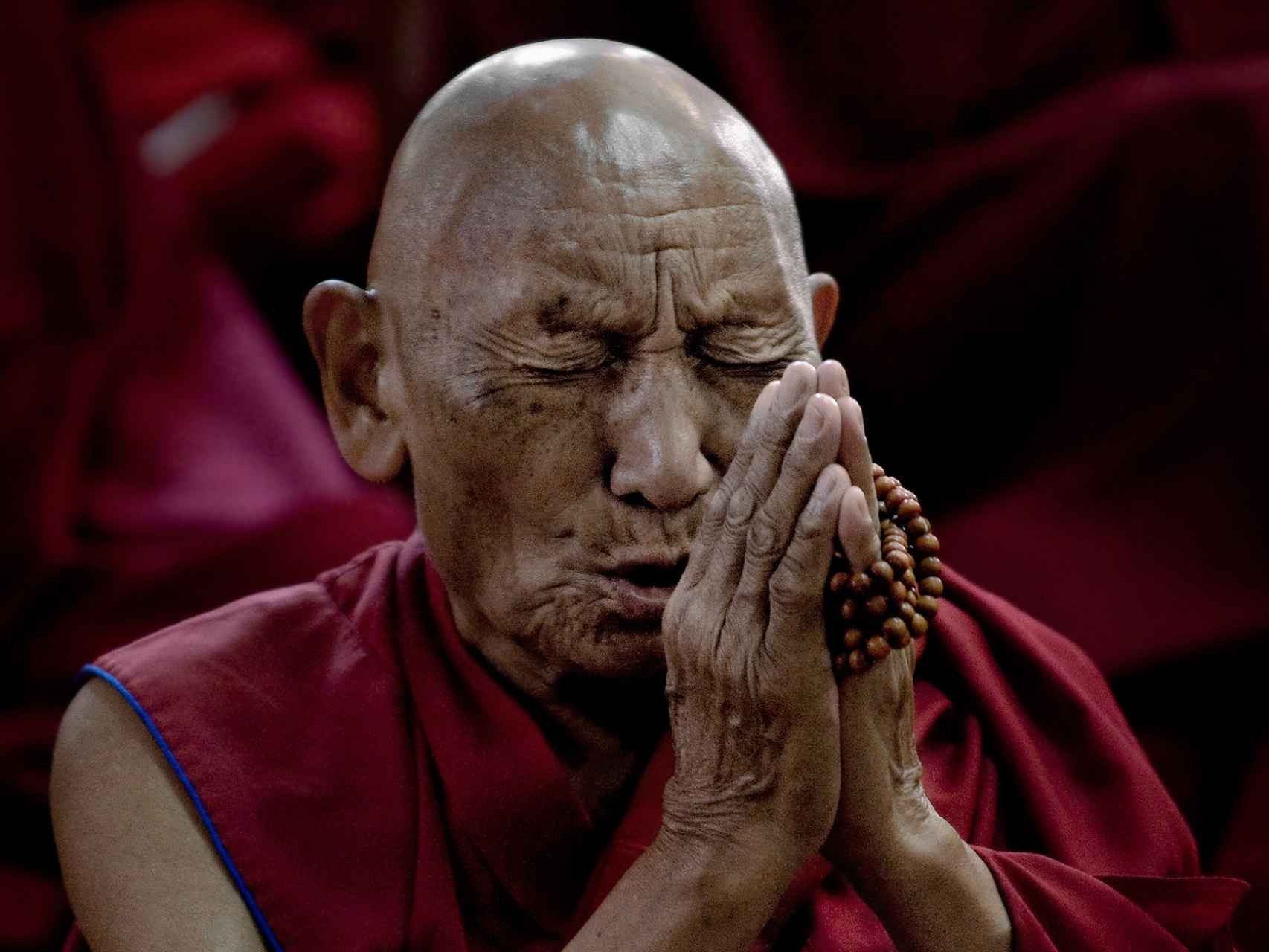
"Cuando el Dalai Lama muera,
violence will begin in Tibet"
Photo: Angel Lopez Soto
(Read text original)
NACHO CARRETERO @nachocarretero
Sonam Lhamo was almost blind when she arrived in Kathmandu, the capital of nepal. The reflection of the sun on the snow of the Himalayas had affected his eyes. "Cada día veía un poco más blanco, as if it gave me a strong light in front of me, hasta que me quedé casi completamente ciega", remember. Sonam has 38 years and now lives in Barcelona. He escaped from his village in Tibet in 1995, when I had 16. He crossed the Himalayas on foot for a month and a week.
"Me fui del Tíbet por dos motivos", account in the House of Tibet in Barcelona, where she asks the photographer not to photograph her. “The first, because I wanted to see the Dalai Lama. The second, for the lack of freedom in Tibet since it has been under Chinese rule”.
–Not for Tibetans. For the Chinese, yes.
–¿Could you give an example?
–The Chinese authorities do not allow us to have images of the Dalai Lama or Tibetan flags. We hid the photos of the Dalai Lama in the stable. If the Chinese police find them, they detain you and torture you.
–¿Chinese police torture?
–To the Tibetans yes. Often. My aunt lived across the street from a police station and saw how the detainees were treated.. Especially the monks and nuns. They strip them naked and pour ice water over them.. Then they beat them with sticks or give them electric shocks. A friend of mine had an electric baton inserted between her legs. And all that for having a flag or a photo.
–¿And why don't all Tibetans flee??
–Because it is prohibited. Los tibetanos no tenemos libertad de movimientos. The Chinese government prohibits us from leaving Tibet. Even to leave our town and go to another, we must request authorization from the Chinese authorities..
That's why, in autumn 1995, Sonam Lhamo decided to escape.
In a group made up of seven people and a guide, Sonam walked for more than a month through the Himalayas at 20 degrees below zero. They had to move at night and sleep during the day to avoid being discovered by the Chinese police.. The Beijing Government has controlled the Tibet region with a firm hand since 1950.
"Se me congelaron algunos dedos de los pies", remember. "Dormíamos unos pegados a otros, pero hacía mucho frío".
It's hard to imagine how anyone other than Tibetan could endure what Sonam and the rest of the refugees endured during their escape.: walk for weeks in the snow, sometimes to 6.500 Altitude meters, with freezing temperatures and along paths and gorges far from the reach of soldiers. "El guía nos decía: 'Pasamos ese pico y ya llegamos'. And when we passed the peak another one appeared and said the same thing again. Like this all the time, day after day", Sonam says..
In the third week they reached the border between Tibet and Nepal. According to the official map, the border between China and Nepal. "Estaba lleno de soldados y policías. Tuvimos que cruzar de noche", remember Sonam. "Tenían uno de esos focos como los de las películas, with a circle of light that goes looking for people. We had to go one by one. I ran and cried, because of fear".
Already on Nepalese soil they began the descent of the Himalayas, a mountain range in which more than a hundred mountains exceed the 7.000 Altitude meters. "Tuvimos que seguir caminando de noche", explains Sonam. "Si la policía de Nepal te coge, They take you back to the border. The Chinese pay them commissions for that.”.
A week and a half later, The group reached a Tibetan camp run by a Swiss NGO. "En el campamento nos recuperamos y nos cuidaron. They healed my eyes. I hardly saw anything. Después logramos llegar a Katmandú". From there Sonam reached Dharamsala, the Indian city that is the headquarters of the Tibetan Government in exile. Four years ago he arrived in Barcelona, where she lives with refugee status and the memory of her odyssey.
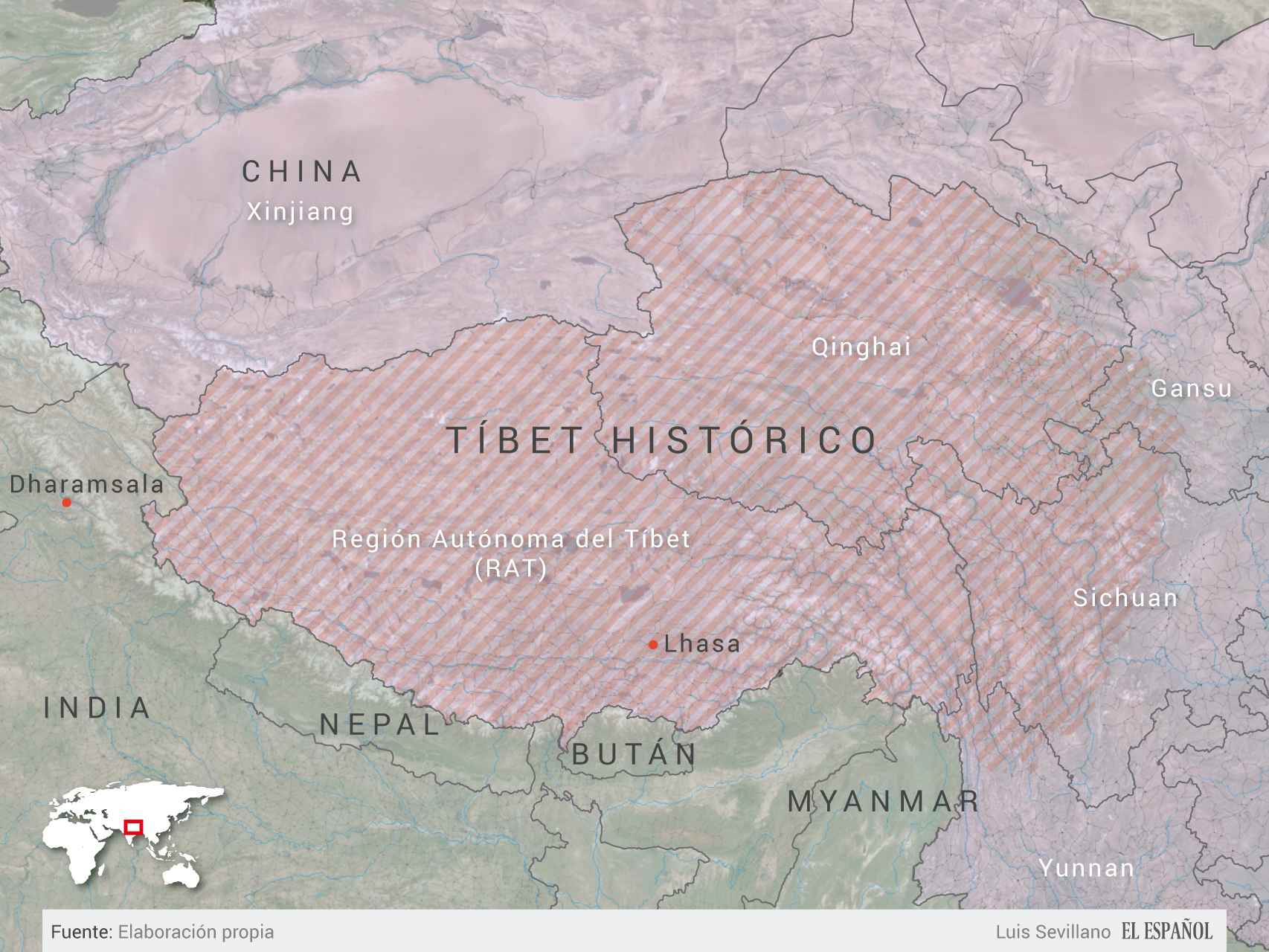
Historical Tibetan Empire.
Tibet was an empire that since 1950 belongs entirely to China. The Chinese government has divided the former empire into two parts: the west became the Tibet Autonomous Region (RAT) and the east was divided between four Chinese provinces.
BONZO
Tibet smells like Yak butter. In every corner, Tibetan peasants burn candles made of this material while they circle the temples, turning their prayer wheels.. The clouds seem to be closer in a country whose average altitude is around 4,000 meters. The feeling of dizziness and fatigue is permanent for the visitor. Also that of peace and isolation, especially in the temples that dot the mountain ranges, where the wind makes bells tinkle among the silent immensity of the landscape.
Before they closed the border, China allowed travelers to enter Tibet as long as they were in groups of five of the same nationality and with an authorized guide.. The guide remains stony silent if asked about any political issue. At most, It is encouraged to translate a sign like the one that appears on one of the slopes that overlook the road that crosses the Himalayas. Composed of giant letters visible for kilometers, its letters say: "Protestar no ayuda a progresar".
in the cities, the contrast between Chinese and Tibetan is striking: Groups of Tibetan peasants with worn faces and colorful clothing come across young, slicked-back Chinese who consult their iPad without getting off their motorcycle.. Large avenues cross lands through which pilgrimages take place. In places of worship, hundreds of soldiers guard. They always carry fire extinguishers with them., buckets of water and huge tongs.
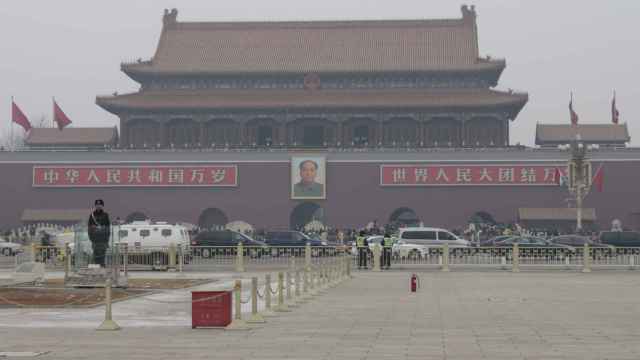
Fire extinguisher in Tiananmen Square, in Beijing, in anticipation of immolations. Nacho Carretero
It happened in February 2009 and Amdoh, in eastern Tibet. A monk of 27 years old named Tabey decided to burn himself to death to protest against the Chinese occupation. They managed to suffocate him while he was still alive, but he died after a few days.
It is likely that Tabey did not suspect that his was a pioneering gesture. "Nos quedamos alucinados cuando ocurrió eso", Thubten Wangchen confesses, Tibetan parliamentarian in exile in Europe and refugee in Barcelona. "No nos lo explicábamos". But other young people imitated Tabey. In the last seven years, 143 Tibetans have immolated themselves. "El Dalai Lama prohíbe al pueblo tibetano ejercer la violencia contra los chinos. It prohibits us from violent resistance. Burning is a form of violence, but against oneself. Los que lo hacen no desobedecen al Dalai Lama".
In March of 2012 two monks managed to set themselves on fire in the spiritual epicenter of Lhasa (capital of Tibet), in Jokhang Square. To prevent the flames from suffocating, in addition to spraying, the young people had drunk gasoline. Since then, than Tibet, It is prohibited to access any public place with lighters, matches or any flammable product.
Since the immolations began, Chinese soldiers carry fire extinguishers and buckets of water. In each check-point From Tibet there are giant tongs that are used to grab and immobilize burning bodies.. Not only in Tibet; The main Chinese cities are also full of fire extinguishers and buckets of water. Above the ground of the iconic Tiananmen Square, in Beijing, the fire extinguishers are lined up.
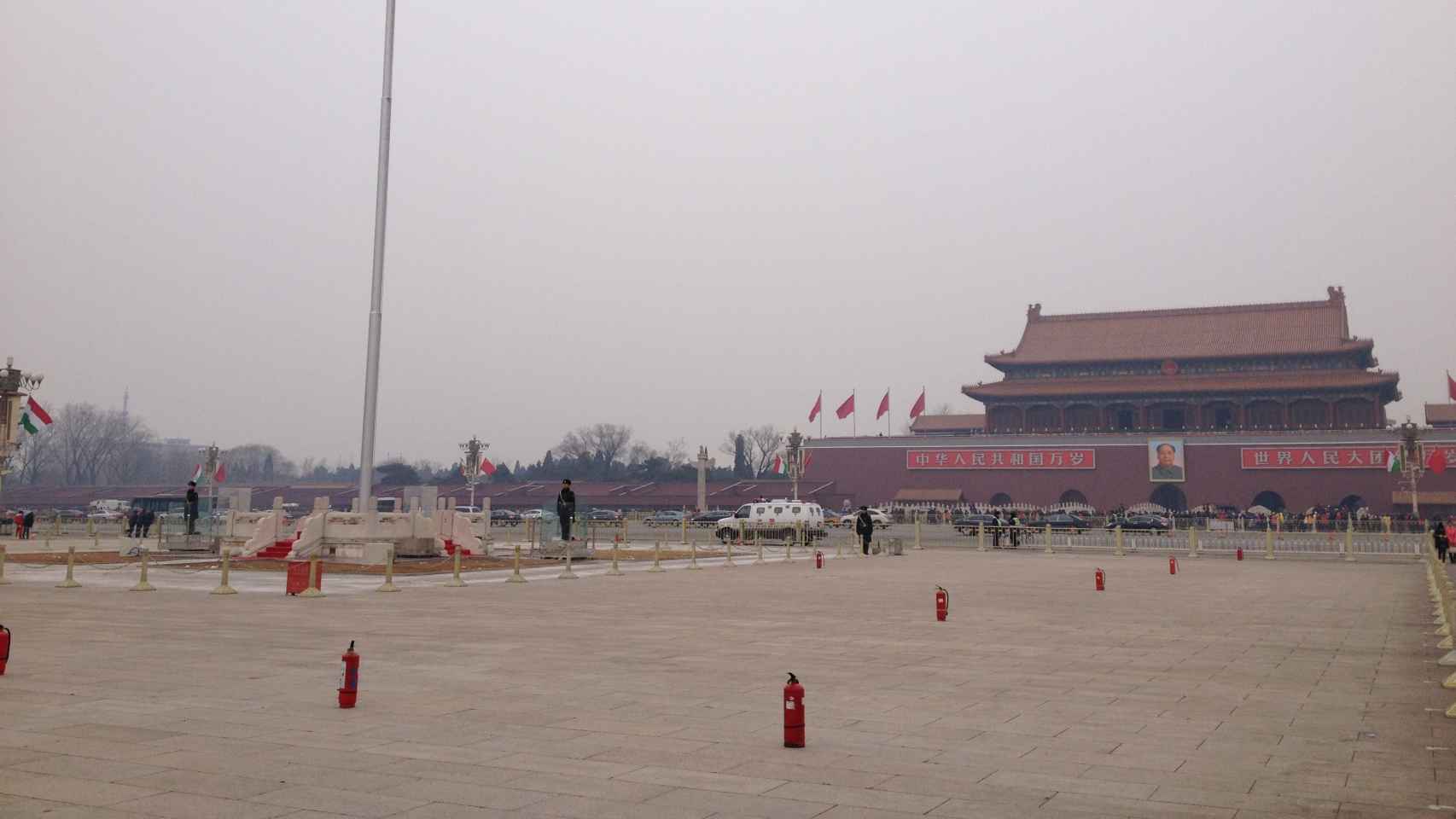
Tiananmen Square has been full of fire extinguishers for a few years now. Nacho Carretero
Immolations are almost never echoed in the media. At least in Europeans. "China las hace invisibles", dice Wangchen. "Requisan cualquier cámara o móvil que haya cerca y tienen intereses en los grupos de comunicación de Europa. Not many people in Spain know that they have burned like hell 143 Tibetans in the last six years”.
The Tibetan Government has a detailed list with the photos and names of all the Tibetans immolated since Tabey did it in 2009. The list is not closed.
CHINESE REPRESSION
Beyond the swings that the Mongol empires, Chinese and Tibetan have had over the centuries, Contemporary history shows us 19th century Tibet as a Chinese protectorate of the Qing dynasty, also known as manchu. The Dalai Lama was the head of the Tibetan Government, a theocracy with economic autonomy that maintained stability until the beginning of the 20th century. Then the Chinese civil war broke out between nationalists and communists, which forced the Chinese troops present in Tibet to return. The administrative suspension was taken advantage of by Tibet to declare itself independent in 1912. He did it on the 13thº Dalai Lama during the Great Prayer.
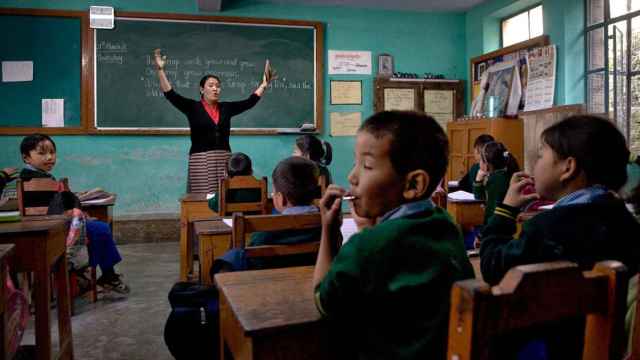
Tibetan school near Lhasa. Angel Lopez Soto
Busy in her internal war, China did not reply, but the Tibetan declaration did not have any international support. At least officially. This situation aroused Tibetan fears. in 1933 el Dalai Lama dejó escrito en su testamento "las sombras de una invasión inminente".
The prophecy was fulfilled. in 1949 The communists won the war and only a year later, he 6 October 1950, Mao Tse-Tung's troops entered Tibet without declaring war.
The resistance was timid with small militia groups formed by thekhampas, the only Tibetan warrior tribe. They carried out specific attacks and spread their attitude of resistance to the rest of the Tibetans.: he 10 March 1959 the insurgency reached its climax. The capital, Lhasa, rose up against the Chinese military presence. The riots were bloody. The repression, cruel.
Thousands of Tibetans left their lives on that day in which the Dalai Lama, alerted by the US secret services, decided to leave the Potala Palace and flee Tibet due to an imminent attack against him. never came back. Today he is in the United States, donde estará unas semanas llevando a cabo revisiones médicas de la próstata "en ningún caso graves", according to the Tibetan government in exile.
Of those riots 10 March Thubten Wangchen fled, the tibetan parliamentarian. Wangchen welcomes us at the House of Tibet dressed in the orange clothing of the Tibetan monk. In his office there are dozens of Tibetan figures and shelves filled to the limit with Buddhist ornaments and portraits of the Dalai Lama.. There is even a shirt from the Tibetan soccer team and another from Athletic Bilbao., team of which Wangchen confesses to be a fan. “They don't just care about money.”, he says laughing.
Wangchen was five years old when his parents fled Kyirong, his town, whose name means Valley of Happiness. On that bloody day, Chinese soldiers entered the village and killed all the pregnant women. His mother was one of the victims.
Wangchen's father crossed the Himalayas on foot with his son wrapped in blankets and clinging to his chest and two more brothers holding hands.. In half a month they reached Kathmandu, where Wangchen begged tourists for coins. Until 80.000 Tibetans arrived in Nepal that year. Most of them slept on the streets.
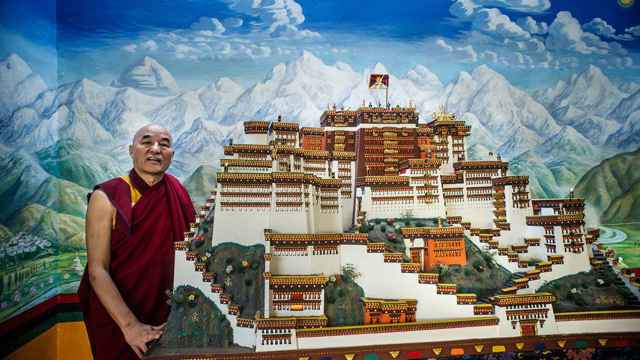
Thupten Wangchen poses at the House of Tibet in Barcelona. Angel Lopez Soto
When the Lhasa uprising was put down, the true face of the Chinese troops appeared. Thousands of people were imprisoned and tortured. There were executions without prior trial. Mao ordered in 1966 the Cultural Revolution, a religious purge that ended with the 90% of Tibetan monasteries destroyed or looted. Every Tibetan was forced to put a Chinese flag on the door of his house. Even today in Tibet this measure waves in every home.
From exile, The Dalai Lama gave the order not to use violence against the Chinese. After that order, many khampas, unable to disobey their leader but also to surrender to the enemy, they decided to take their own lives. Non-resistance is still imposed today.
Young Tibetans are increasingly dissatisfied and rebellious in the face of the Dalai Lama's order not to resist with violence. "Es difícil contenerlos", dice Wangchen. "Tienen ya muchas cosas planeadas y preparadas", confess before adding: "Cuando el Dalai Lama se muera…. when you die, everything is going to start. Violence and attacks are going to start. Tibet is going to explode. Tenemos que solucionar esto antes".
According to figures from the Tibetan Government in exile, 1,2 Millions of Tibetans have died as a result of the Chinese Government's repression. This would mean the 20% of a population of about six million people. The Tibetans define this situation as a genocide and therefore in 2005 Wangchen led a complaint against the Chinese Communist Party presented in the National Court by the Tibet Support Committee (CAT).
It was the lawyer José Elías who conducted a process that in the year 2009 was truncated by the abolition in Spain of universal justice. China's economic and commercial pressures overshadowed the entire process. The former foreign minister, José Manuel García-Margallo, he came to say 10 April of that year: "China tiene un 20% de la deuda pública española y bastaría un click de ratón en China para que nos encontrásemos con una prima de riesgo como la que teníamos hace dos años".
THE MAJORITY, CHILDREN
The situation today remains unsustainable for Tibetans. Especially since 2008, when Beijing hosted the Olympic Games. that year, for the first time since 1959, Lhasa residents took to the streets and clashed with the authorities, taking advantage of media and humanitarian attention on China.
The revolt was once again put down with violence and since then Chinese repression has given no respite.. "Hasta ese año unos 2.000 o 3.000 tibetanos huían cada año del país", Wangchen account. "Desde 2008 only salen 100 o 200. Most are children. The adults have given up. China has right now 21.000 “Soldiers in Tibet and those on the border have orders to shoot anyone who tries to cross.”.
For every child and young person who flees, a family remains that pays the consequences. "Si un miembro se va del país, They expropriate the family's land and take away their jobs and even imprison them.", dice Wangchen. The measures against families reduced outings to 110 In the year 2015.
Tensing Tsnam is known as Thupteng. Has 44 years, He lives in Spain and escaped from Tingri, his village in Tibet, when I had 14 years. A week after leaving, the Chinese police showed up at his family's house.. "Si no vuelve en un mes, habrá consecuencias para vosotros".
During the next three months, The agents visited Thupteng's family almost daily. "Detuvieron a mi tío y le hicieron unos agujeros en el torso. I myself saw the holes in 1991, when I came back for a few days to visit. My mother kept telling me that it wasn't my fault.. They arrested my grandfather and beat him. Quemaron los establos y mataron a los caballos".
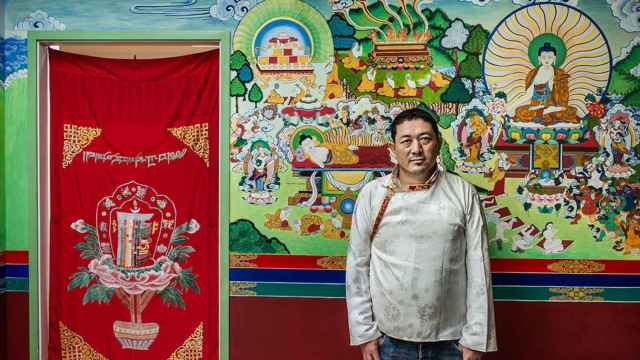
Thupten fled Tibet with 14 years. Angel Lopez Soto
Thupteng crossed the Himalayas on foot and when they were three days away from arriving he sprained his ankle.. "Seguí la ruta cojeando y llegué a Katmandú usando dos palos como muletas", dice. in 1991 He decided to return to his town to visit his family.. "A los 15 minutes from arriving at my house, the police showed up. They took me to jail and kept me on the floor of a dungeon for a week., no blankets or food. When they let me go, my family told me: 'Vete y no vuelvas jamás'". Thupteng's voice breaks for the first time: "Nunca los he vuelto a ver".
In the year 2000 received a call from his brother. With a lot of background noise and a broken voice, Thupteng happened to hear that his father had died after being beaten by the Chinese police in the middle of the street.. "Había intentado esconder a una chica embarazada que buscaba la policía. Probably to perform a forced abortion. Le pegaron en medio de la calle hasta matarlo". Now yes, Thupteng cried.
He says that when he sees a Chinese flag, makes your heart skip a beat. "Los chinos en Tíbet se refieren a nosotros como 'animales'. Es así como nos llaman".
IN CURRENT TIBET
Anyone who has a Tibetan flag or an image of the Dalai Lama anywhere in Tibet is still imprisoned today.. Also whoever writes or expresses something related to the political aspirations of the country.
The past 9 February, tibetan new year, monks Pagah and Orgyen were detained in Chogri for performing a temple ceremony in honor of the Dalai Lama. eight days later, Tibetan writer Shok Jong was arrested for writing a book on the history of Tibet. All remain detained and incommunicado to this day.. "Esto no pasó hace años, is happening. China no respeta los derechos humanos y nadie dice nada", Wangchen complains..
In modern Tibet, A Chinese worker earns twice as much as a Tibetan worker. The Chinese Government doubles the salaries of Chinese who agree to move to Tibet. There are already eight million, more than the native Tibetans, there are only six.
In today's Tibet, most schools segregate between Chinese and Tibetan children. Also public hospitals. Most Tibetan children no longer know how to write in their language. And this despite the fact that the Government of Beijing has undertaken a program to encourage mixed marriages through aid.. "El objetivo", dice Wangchen, "es que se mezclen étnicamente y desaparezca la identidad tibetana”.
In today's Tibet there is no freedom of expression. The country is currently closed to tourists and journalists need express authorization from the Government to access, always in the shadow of a guide, like in North Korea. Tibetans themselves do not have freedom of movement: If you want to go from one town to another, They must have authorization from the Chinese authorities. The country is plagued by check-points military. Anyone who wants to leave must cross the Himalayas on foot or get a fake visa..
In Tibet there are birth controls. Pregnant Tibetan women have to go for a mandatory check-up every 15 days. According to the Tibetan Government in exile, there are still cases of sterilization and forced abortions.
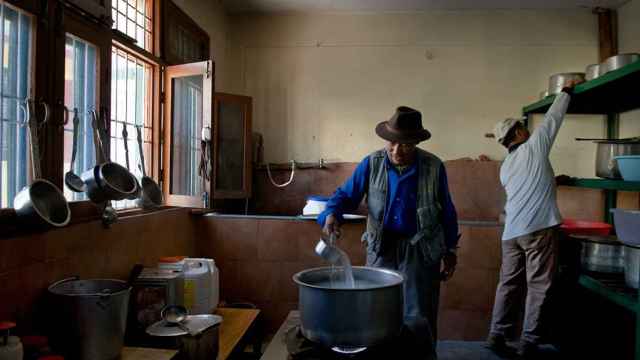
Former Tibetan political prisoner Ringchen Samdhup Angel Lopez Soto
The Chinese government and those who defend its position argue that China has brought development to an isolated people, poor and based on a theocracy in which the religious are an upper caste that accumulates wealth. They have built airports, They have connected Lhasa and Beijing by train, they have brought electricity, roads and bridges to Tibetan villages and have begun to manage the area's enormous freshwater reserves, For many, the true Chinese interest in the region. They also allow freedom of worship and the use of the Tibetan language..
"Admitimos que China ha traído progreso y desarrollo a Tíbet, but it is a development imposed by force that we did not ask for and that benefits the Chinese population, no a la tibetana". The one who replies is Thinley Dropatsang, of 39 years, who fled Tibet when he was 22. "¿Who can use airports and roads? The Chinese, not us. ¿Why should we be grateful for something we didn't ask for?? We Tibetans want to live as our ancestors did, de forma austera y en comunión con la naturaleza".Thinley fue víctima de los programas de reeducación del Gobierno chino. in 1995 The authorities took control of their town and subjected several neighbors to the program. "Nos repetían que el sistema comunista chino es perfecto. Que si nos uníamos a su causa estaríamos protegidos al 100%".
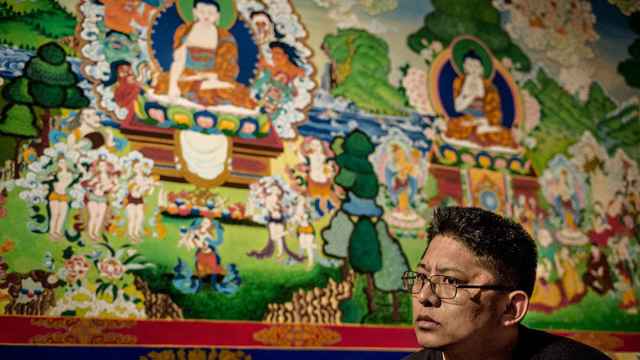
Thinley Dropatsang lives as a refugee in Barcelona. Angel Lopez Soto
As Thinley did not seem very convinced, the Chinese soldiers decided to hang him by his thumbs. "Estuve así varias horas, It was a horrible pain.. They also burned spicy spices and made our eyes burn with the smoke.. Después estuve 15 días encerrado en un cuarto oscuro de un metro por un metro".
After the experience, Thinley decided to escape after obtaining a fake passport. Hoy, together with others 77 Tibetans, lives in Barcelona with refugee status. Sitting on a chair with an angry expression, concludes his testimony: "Así traen el desarrollo los chinos", dice. "Y nadie hace nada".


