

The attraction to Buddhism of the man with a thousand faces. And the legend of the visit of Jesus Christ to Nepal
DIEGO A. MANRIQUE
5 FEB 2018
(ver original article)
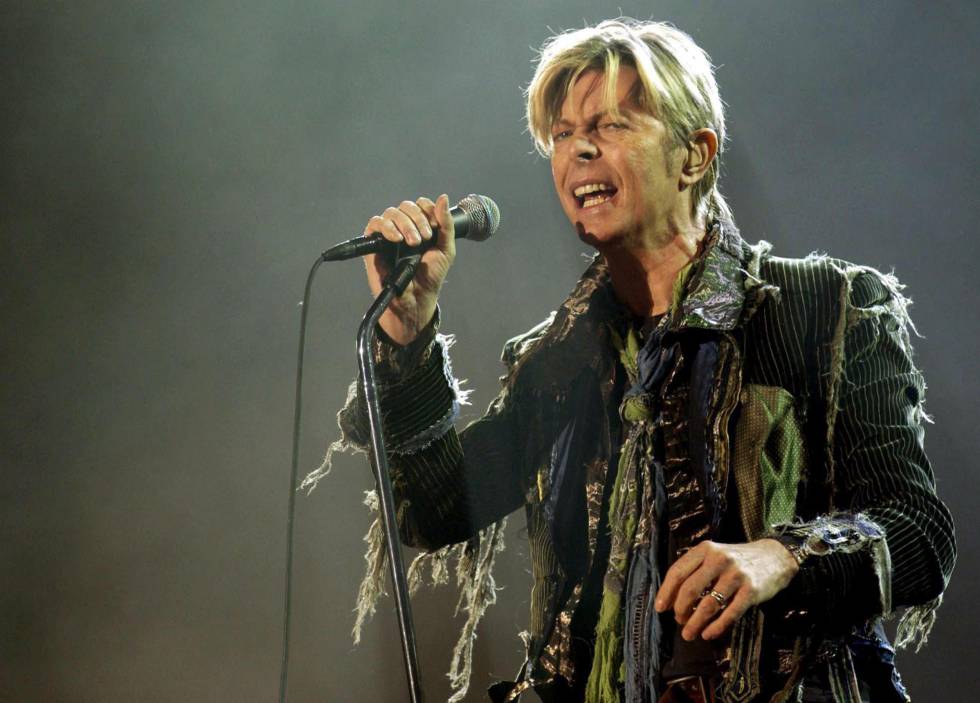 David Bowie performing in Tibet in 2004
rebound, A novel leads me to explore a little-known facet of David Bowie: his sympathy for the Tibetan cause. Many believed that he was simply waving a trendy banner, in the wake of those pro-Tibet independence concerts organized by the Beastie Boys. His commitment was deeper: in 1997, David posted the topic Seven Years In Tibet. He even recorded a version in Mandarin; radiating insistently from Hong Kong, before the enclave rejoined China, and with bad pronunciation.
We are not facing an anthem for the barricades: collects the last thoughts of a Tibetan monk, shot by chinese soldiers. Actually, Bowie's sympathy for Buddhism came from the years 60, after devouring the texts of Jack Kerouac and other authors beat. The book hit him hard Seven years in Tibet, of the Nazi Heinrich Harrer. He thought about retiring to a Buddhist monastery but was dissuaded by his friend Chime Rinpoche., Tibetan refugee in London. On his first LP (1967) included Silly Boy Blue, about an apprentice lama.
My curiosity comes from The Secret Books, novel by Marcel Theroux (the son of Paul Theroux, who precisely toured China for one of his travel books). The protagonist is Nicolas Notovitch, the Russian adventurer who signed in 1894 The unknown life of Jesus Christ. Notovitch asserted that, while convalescing in the monastery of Hemis, He read a codex that told the life of a holy man, Issa, identifiable as Jesus Christ. He explained his years of invisibility: like future hippies, He had visited Tibet looking for spiritual food. After translating it, He published it when he returned to Europe.
The book dazzled media outlets such as New York Times. Hoy, Of course, we would have sniffed there a hoax, a camel. As such it was denounced shortly after, when an English professor came to Hemis and found that there they knew nothing of Russian or the manuscript. However, search on Google: There is an entire publishing industry around the pilgrim Jesus Christ that —supposedly, among the 13 and the 25 years— came to Hindustan.
Marcel Theroux assumes that Notovitch was a trapisondist, a scammer. He has located documents from British officials who treated him with distrust (Russia and the United Kingdom, remember, They aspired to control Central Asia). He also has evidence that Notovitch lived in Paris in 1939.
Since he was of Jewish descent, They painted things for that trickster. Theroux's pirouette consists of attributing to him a pinch of noble motives. In his imaginative Gospel, charged Pontius Pilate with the responsibility for condemning Jesus to death, to the dismay of the priests of Jerusalem. He thus dismantled the most pertinacious of the accusations of anti-Semites.: the murder of the Son of God.
Without knowing it, Notovitch was competing with another Russian Jew living in Paris, Piotr Rachkovski, head of the tsarist secret police, who had commissioned the preparation of that fatal libel, The Protocols of the Elders of Zion. Yeah, I'm sure David Bowie would have enjoyed Theroux's story.


