

GENETICS: The first humans arrived in Tibet more than 60.000 years
BELOVED BLACKSMITH
26 SEP. 2017
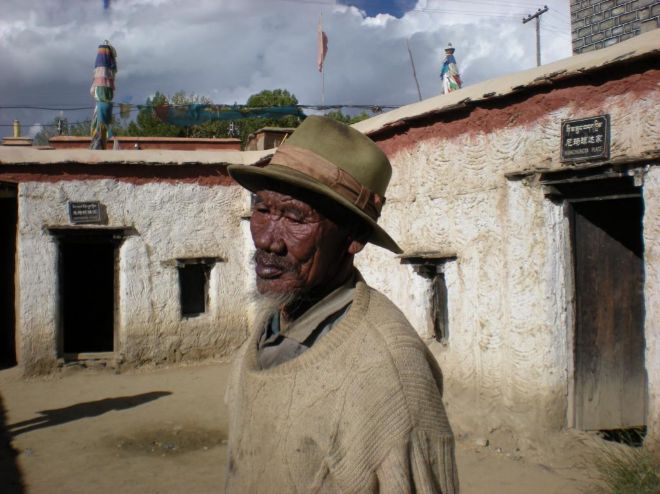
Inhabitant of the Tibet region ALL THE CHILDREN
The inhabitants of the plateau present variations in five genes that help them survive in environments where oxygen is scarce
Researchers have sequenced the genome of 27 Tibetan natives and identified genetic variations that present adaptive advantages
To more 4.500 meters high, The Tibetan plateau is an inhospitable place with extreme conditions. The cold climate makes it difficult to grow food and the oxygen level is a 40% lower than at sea level. And yet, native populations have managed to adapt. your body (your circulatory system in particular) works slightly differently than people accustomed to low altitudes thanks to, largely, to your genetic inheritance. Some of these differences have recently appeared detailed in an investigationconducted by geneticists at the University of Texas and published in PLOS Genetics.
The inhabitants of the plateau present variations in five genes that help them live in that environment, one of which comes from an extinct subspecies of hominids, the denisovans. These mutations laid the foundation for the extraordinary natural capacity that has allowed them to survive in this territory for millennia.. Specifically, Analyzes have identified two genes involved in adaptation to high altitudes (EPAS1 and EGLN1), as well as two others related to the regulation of blood oxygen level (Ptgis the kctd12). This variation of the EPAS1 gene, is the one that researchers have traced back to Denisovan genome.
"Este análisis genético completo supone una visión muy importante sobre los factores subyacentes en la historia de esta población y su particular fisiología adaptativa a grandes altitudes" explain Simonson's thesis, researcher at the University of California, and co-author of the article. for this job, The authors have sequenced the genome of 27 Tibetan natives and have sought genetic variations that present adaptive advantages, in addition to reviewing the demographic history of the Tibetan people.
"El estudio proporciona un nuevo contexto para análisis comparativos con otras poblaciones que habitan permanentemente en altura", explains Simmonson,"y que presentan diferentes características pese a estar sometidos a los mismos desafíos, como los relativos a enfermedades cardiopulmonares o apnea del sueño". Tibetans have also developed a variant of the VDR genes that plays a compensatory role in the face of vitamin D deficiency, which frequently affects Tibetan nomads.
Contact between species
As Homo Sapiens spread across the planet, colonized new places and came into contact with other hominid species, like neanderthals and the Denisovans. Although it was previously believed that the first humans had arrived in the Tibet region only 15.000 years, Recently published genetic and archaeological discoveries suggest that His arrival occurred around 62.000 years, in the middle of the last ice age. The first traces of human presence found in the area, They date back between 39.000 and 31.000 years.
Sometime before the disappearance of the Denisovans, the two species mixed and mated, exchanging genetic material, including the EPAS1 gene. With the passage of time, It is believed that groups of humans migrated to even higher altitudes and those who had the EPAS1 gene demonstrated better adaptive capacity.. This way, the gene became more common. This same EPAS1 gene is also found in Nepalese populations and its functioning has been the subject of different studies to discover the adaptive keys of the Sherpas..
Genome analysis of the inhabitants of the Tibetan plateau has revealed a mixed genetic heritage, shared in a 82% with East Asians and in a 11% with inhabitants of central Asia. Other evidence has indicated that Chinese and Tibetans separated as subgroups between 44.000 and 58.000 years, although gene flow between the two groups continued until approximately 9.000 years.
It is estimated that Tibetans began to acquire genetic mutations that protected them from hypoxia does 12.800 a 8.000 years. From now on, Future research will focus on identifying the interaction between the different genetic lines of these populations and the influence of environmental factors. (for example resistance to hypoxia, diet, cold, ultraviolet rays). The ultimate goal is, according to simonson, "revelar los entresijos biológicos de esas respuestas fisiológicas individualizadas".


