

EFE – Madrid
28/03/2018
The hidden art of Tibet revealed
When the photographer Thomas Laird arrived in 1986 to Lukhang Temple and saw the murals that adorned this small meditation chapel in Lhasa, he immediately thought that he had to show this treasure of Tibetan art to the world.. But they had to pass 30 years for your dream to come true.
Then he took some photographs, but they didn't have much quality. "Eran solo detalles de los murales, It was impossible to get a whole one in one shot., eran demasiado grandes y no había distancia para tomar las fotos", Laird recalls in a telephone interview with Efe.
He had to wait for the digital photographic technique to be developed to be able to use the multiple capture system using flat or spherical panoramic images., that is to say, many photographs taken from exactly the same distance to later compose the complete image of each mural on the computer.
One hour of on-site work for the smallest one and up to a week for the largest ones for a total of 200 murals that Laird photographed on five different expeditions and then worked individually on the computer in exhausting days until achieving the quality necessary for spectacular images that can be seen in an enormous volume published by Taschen.
Huge for size -70×50 centimeters and 23 kilos of weight- and by concept. Almost 500 pages with 6 fold-outs that can be seen in all their beauty on a lectern designed specifically for this book by Shigeru Ban, Pritzker Architecture Prize 2014.
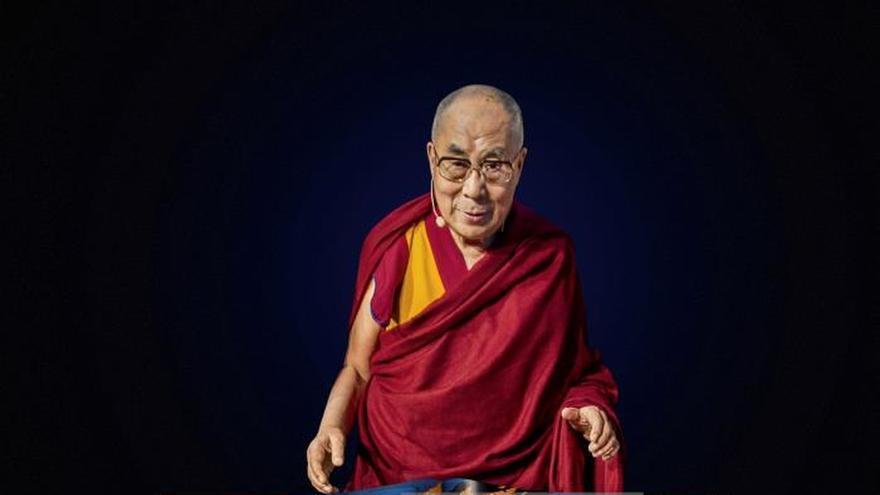
Seven years of work concentrated in a limited edition volume: 998 collector's copies each signed by the Dalai Lama and in two versions.
The simplest, the huge book with the beautiful images taken by Laird, con el atril y una 'pequeña' explanatory guide in English 528 pages. Son 918 copies to 10.000 euros, on sale from this week.
If you add a sheet printed in plaster and gold leaf with a handmade solid wood frame, los 80 Buyers will take home a bibliographical gem for 25.000 euros.
But beyond Taschen's very careful edition - each sheet was printed five times until the highest quality was achieved -, Lair's goal when he got Benedikt Taschen to accept the challenge of carrying out this project was, above all, publicize these murals.
A thousand years of artistic history of Tibet spread across hundreds of temples throughout its territory and which until the 1950s had barely been contemplated by the Dalai Lamas and meditation teachers in their process of learning Buddhism..
Difficult to access in many cases and almost impossible in others (some are painted nine meters high), The colorful murals are a detailed tour of Buddhist history and philosophy, that for centuries remained hidden from the eyes of the profane.
Golden, Reds and greens dominate the drawings that are simple in appearance but profuse in so many details that they make contemplation endless., as in the case of those in the Jokhang temples, Lukhang O Gyantse.
Laird was so obsessed with showing the world these murals that he was not aware of the challenge he was getting into when in 2009 He began to use new techniques to reproduce the murals on paper.
"Cuando el dalai lama me habló de la importancia de los murales para su cultura, then I thought: 'tengo que hacerlo' (…) and when the Taliban destroyed the Bamiyan Buddhas (Afghanistan) supe que no podíamos retrasar más el proyecto", Remember Laird?.
Era 2001. It would still take a few years to finalize it with Taschen and along the way they were joined by Professor Robert A.F. Thurman, who writes about the spiritual meaning of murals or specialists Heather Stoddard and Jakob Winkler, that analyze the technique of each image.
A book with which Laird hopes to achieve his goal, which is showing the world an art and a culture that is much closer than we can believe in the West.
And he makes a fun comparison with Cervantes' Don Quixote as the protagonist. "Cuando viví en el Tibet y Nepal, my life there was similar to that of Don Quixote. I moved on horseback and had to blindly trust my horse. Creo que Don Quijote no se hubiera sentido extraño allí", he says between laughs.
Alicia García de Francisco


