

By María Parente and Roberto Carlos Mirás
24/06/2018
(empty original)
Sometimes we see that the present again and again is the cover of many media. In this blog we have already spoken on occasion about what happens in Tibet and what has happened to those inhabitants called Tibetans. In the year 2008, The Tibetan population barely reached six million inhabitants, While China already exceeded eight million, distributed by a territory of 2.200.000 square km. However, Beijing denys with rotundity that a colonization process is taking place and maintains against evidence, that only between the 3% and the 5% From the inhabitants of Tibet are from Chinese ethnicity. And 10 March 1959, The current Dalai Lama fled from Tibet, After having failed a popular uprising against Chinese troops. The leader of the Tibetans, disguised as a soldier and accompanied by some of his faithful, It was established in Dharamsala, north of India. More than fifty years later, This is the situation of the people who saw him born.
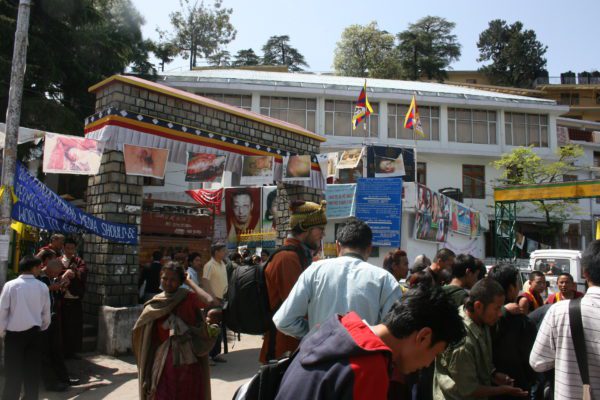
TIBET
It has a lot of artistic wealth and without exploiting resources. From a strategic point of view “The country of the snow” represents a great bet for the Chinese government, that he gets uranium, Lithium and some 200 more minerals and organizes from there the hydroelectric potential of the region. Currently, state and private companies land in mass in the Tibet to exploit the land without mercy and, In return, get huge sums of money. A quarter of Chinese arsenal hides in the tibetan skirts of the Himalayas mountain range. According to some official media, Tibet's subsoil value can reach 600.000 million yuan, some 60.000 Millions of euros. Buddhism came to Tibet towards the year 650. However, Chinese authorities consider it part of their territory for centuries for dynastic and conquest unions in the imperial era. But Tibetan exile emphasizes that his country was independent until he was occupied by the communist army in the 1950s.
There have been numerous authors who have talked about this and other issues and in some cases they have dedicated and dedicate their lives to clarifying what has happened and what is currently happening. Others have made Tibetan Buddhism a true flag and have even changed their lives through this philosophy.. From “Tibet breaks its silence. Causes and Reality of a Rebellion” Tsering Woeser to “History of the Tibetans. From the origins to the current conflict” both published by Milenio Editorial until “Goodbye Tibet, bye” (Miraguano Editions) whose author Iñaki Preciado Idoeta describes to us what happened in the year as he has done in other previous works 1959 when the Chinese Army began a great campaign… Against the rebellious tribes of southern Golog and Sertar- To which he adds: “In the Doke Valley the rebels had a force of several thousand men, poorly armed. The much larger Chinese Army, well armed and skilled in guerrilla warfare, I ruthlessly crush the rebellious nomads.
in 22 days he killed more than 1800 rebels included, the chiefs Kadoro and Renkung” According to his editor José Javier Fuente del Pilar “I have had the opportunity to speak with him many times while writing this book.. I have seen him deeply moved when remembering certain episodes narrated in it., and I know, why did he confess it to me, what, when I wrote it, I even had the impression that it wasn't him who did it., but someone else, and that later when reviewing and correcting the text, He found long passages that he found difficult to recognize as his own.” and his latest contribution is a great work that we hope will not be the last, also in Miraguano: “The magical wisdom of Tibet” A great contribution that will make us aware of this topic, much more in depth than we know. Even one of the “fathers” of transpersonal psychology, Ken Wilber in his “Grace and Courage. On the life and death of Treya Killam Wilber” published by Gaia Ediciones tells us about the Perennial philosophy and a series of philosophies or religions that from the beginning in one way or another have been and are part of our lives. In one of his chapters Wilber tells us about one of the most important teachers within the Tibetan tradition Kalu Rinpoche (1905-1989) News about this extraordinary saint soon began to spread throughout Tibet and lay devotees brought him food and left it at the entrance to his cave.. Finally the Karmapa- the “Pope” of the Kalu tradition, He sought him out, tested his understanding, and announced that his meditative knowledge was similar to that of Milarepa., (History of Milarepa. Great and powerful Yogi. Edition and translation from Tibetan by Iñaki Preciado Idoeta. Miraguano) the greatest yogi and sage of Tibet. For many years he was totally retired in silence until he came to the West. When he died in 1989 He had founded more than three hundred meditation centers around the world and had initiated more Westerners into the Dharma than any other man in history..
The Frustration of a State
In “Tibet”: the frustration of a state” José Elías Esteve Moltó offers the reader an exhaustive study on the same. A work in which its author reflects on four relevant and current issues: The first, the current human rights situation in what is now the Chinese Autonomous Region of Tibet. She further , the specific issue of the genocide of the Tibetan people. And it also offers an original critical approach to the international legitimacy of the policy developed by China in Tibet and finally to the relevance of the application to Tibet of the principle of self-determination of peoples.. We hope for your interest to see this work translated into other languages very soon.. More than a million Tibetans have been victims of the genocidal madness of the communist regime in Beijing. A study carried out by Amnesty International states that the 70% of inmates have died due to beatings, to hunger and forced labor. They report a situation but as of today there is no response.
Tibetans a minority in their own country
Tibetans are a minority in their own country. The number of exiles exceeds one hundred thousand people. Chinese prisons are full of Tibetan prisoners, Panchen Lama Gedhun Choekly Nyima being the youngest prisoner in the world. (Panchen Lama. The Dalai Lama's chosen child. Beijing hostage. Gilles Van Grasdorff) It is unknown if he is alive or dead. The translator and philosopher Fernando Mora has also published in Kairos a biography that brings us closer to an extremely interesting teacher and in a world full of technology it seems (and we don't want) let it be forgotten. “The teachings of: Padmasambhava and Tibetan Buddhism” A work carried out by a meticulous author when it comes to disseminating and disseminating this master, erudite, being enlightened and the main architect of the introduction of Buddhism in Tibet. To this end, Mora has studied with various teachers for several years and is currently continuing his studies and meditative practice.. Below we offer you a chronology of a topic that unfortunately today, remains unresolved.
CHRONOLOGY OF TIBETAN BUDISM
– 1200 a 6000 BC Archaeologists date the first settlements in Tibet to the Mesolithic era.
– Siglo VII AD With the king Songten Gampo (597- 649) the history of Tibet begins. He was the first great Tibetan king. According to tradition, occupied the number 33 of a great dynasty. His reign brought about cultural development, unprecedented religious and military. Songten Gampo had the Jokhang temple built in the center of Lhasa, to house the statues of Buddha that their wives had brought. He is responsible for the consolidation of Tibet as one of the great powers of Asia..
- 821: Peace Treaty with China. Demarcation between the border between China and Tibet. “Tibetans will be happy in Tibet and Chinese will be happy in China.””
- 13th century: The Mongols invade Tibet in 1240. Impressed by the intellectual development of Tibetan monasteries, As spiritual guide the invaders choose the famous Sakya Pandita, Patriarch of Sakya Monastery. Shortly afterwards Khuliliai Khan transferred the spiritual and material authority of Tibet to Sakya Pnadita's successor., unifying both powers. An action that will have a wide impact on the future of Tibet.
- Under the Yuan dynasty (1279-1938) the Lama changes as imperial preceptor and supreme pontifical of the Empire.
- 1644-1911: Ping Dynasty. The Manchus reign over China.
- In between 1720-1792: The Manchu emperors exercised their influence over Tibet by sending troops against the Mongol and Gorkha invasions. (Nepalese) and intervene in the government. However, Tibet is not annexed.
- 20th century: in 1904, The British enter Lhasa and the mystery of Tibet is revealed to the eyes of the West. However, the legend of the Land of Snow had only just begun. The English left Tibet and returned to India that same year., leaving a representative in Lhasa.
- 1911: Proclamation of the First Republic of China. And it was during the government of the thirteenth Dalai Lama when the soldiers were thrown out and managed to govern the territory almost exclusively under a strict regime of submission of the population to religious power..
- El XIII Dalai Lama. Thubten Gyatso proclaims the independence of Tibet.
- 1935: The 13th Dalai Lama is reincarnated after his death, according to Buddhist tradition, in Gyatso Tenzin.
- 1937: With two years, Tenzin Gyatso was identified as the fourteenth reincarnation of the Dalai Lama. “If we do not listen to the words of Gyalwa Rinpoche (the precious winner) –title with which Tibetans refer to the Dalai Lama., Who are we going to listen to?”
- 1947: Independence of India and Pakistan. Great Britain disappears from the Region and Tibet loses its protection.
- 1949: After the victory of the communists, Beijing took control of Tibet. China explains that it sent the People's Liberation Army to free the serfs after the failure of negotiations for the peaceful liberation of the region. and the 1 of October Mao Tse Tung proclaims the People's Republic..
- 1951: At only sixteen years old, The Dalai Lama signs the seventeen-point agreement with the Beijing authorities: surrenders the sovereignty of Tibet to China on the condition that religious freedom and a certain autonomy expressed in its own traditional government are guaranteed. That agreement was impossible on China's part.
- 1954: The Dalai Lama left Lhasa and a religious ceremony took place on the river bank. And in Beijing the Panchen Lama and the Dalai Lama were received by Mao Tse Tung.
- March- 1959: After seven years in which autonomy is disappearing and Beijing suffocates the local government, The Dalai Lama backs down and leads the largest uprising against power in Beijing. And 10 March, A crowd occupied their leader's residence in the Potala Palace to prevent it from falling into the hands of the Chinese government.. The Dalai Lama and some of his followers fled on horseback and crossed the snow-capped peaks that form the border with India.. Exile of the Dalai Lama welcomed in India and constitution of the Tibetan Government in exile.
- 1963: China bans foreigners from visiting Tibet, The ban will not be lifted until 1971.
- 1965: The Tibet Autonomous Region is established (TAR) which has an autonomous government supervised by Beijing. Third United Nations resolution.
- 1966: Cultural Revolution, purge campaign undertaken by Mao, Much of Tibet's cultural assets are destroyed.
- 1971: The People's Republic of China replaces the Republic of China (Taiwan) at the United Nations. The People's Republic accesses the UN Security Council as a member with the right to veto.
- 1976: Mao's death. Beijing apologizes for actions committed during the Cultural Revolution.
- 1978: Negotiations between the Tibetan Government and the Chinese Government. Without any results.
- 21 September 1987: The Dalai Lama makes public “his five-point peace plan for Tibet”” before the United States Congress.
- 1989: The Dalai Lama was awarded the Nobel Peace Prize for his fight and respect for human rights., including those of the Tibetans. and the 7 March the Chinese government decrees martial law in Lhasa, after three days of demands and riots.
- 1995: The Dalai Lama designates the boy Gedhum Chokyu as the reincarnation of the Panchen Lama, the second most important figure in Tibetan Buddhism, but the Chinese authorities decree his house arrest and enthrone another six-year-old boy, Gyacain Norbu, as eleventh Panchen.
- 2000: Contacts resume between the Chinese authorities and the Tibetan government in exile, which proposes advancing the alternative of the “middle path.”” proposed by the Dalai Lama in 1979, which entails the renunciation of independence in exchange for autonomy that allows Tibet to preserve its identity.
- 2001: The Tibetan community in exile elects Samthong Rimpoche as Prime Minister of the Tibetan Government in elections promoted by the Dalai Lama.
- 2002: Negotiations began between China and the Tibetan exile to seek a peaceful solution: “We have tried to find a peaceful solution. We have sent our representatives and they have met with the authorities of the People's Republic of China on six different occasions to resolve doubts and present our points of view.. During these years the harsh repression has intensified.
- 24 June 2003: India signs agreement with China recognizing Tibet as a Chinese province, but maintains refugee status from the Dalai Lama and his government in exile.
- May 2004: The Beijing authorities release a document in which they reject the Dalai Lama's claim to achieve more autonomy based on a model similar to that of Hong Kong.
- March 2005: The Dalai Lama accepts, In an interview with the South China Morning Post of Hong Kong, Tibet is part of the People's Republic of China..
- July 2006: The first railway connecting the Chinese and Tibetan capitals arrives in Lhasa.
- January 2008: Foreign tourism in Tibet increases by 136 percent, more than in the 2007, when the roof of the world received 365.000 foreign tourists, in front of 210.500 visitors in 2006. and the 14 March, Lhasa sees worst unrest in two decades, son 13 muertos, according to the official balance, in the confrontations, between Tibetan protesters and Chinese security forces, although the Tibetan government in exile estimates a hundred deaths. The Dalai Lama 18 March threatens to resign as spiritual leader if violent incidents in Tibet worsen.
- July 2008: Several Western countries threaten to boycott the opening ceremony of the Beijing Olympics, yes China does not dialogue with the Tibetans.
- August of 2008: The Beijing Olympic Games are held, without any boycott, The Dalai Lama denounces that abuses against Tibetans persist despite the Olympic truce.
- In his most recent controversy, The Dalai Lama, at the invitation of his Government, visited Taiwan. A predominantly Buddhist country- claimed by China as part of its territory, to pray for the victims of the recent hurricanes, which ignited the anger of the Chinese Government, which considered it a provocation. The Dalai Lama assured that his work was purely human and religious.
- The last fifty years of Chinese rule have transformed Tibet, improving its infrastructure and services while relentlessly destroying local culture and limiting religious freedoms. The emigration of the Han population is now the majority in the Tibetan capital of Lhasa and the Chinese have come to monopolize the local economy, making Tibetans second class citizens in their own land.
LOS DALAI LAMA
I Gedün Truppa (1391-1475)
II Gedün Gyatso (1475-1542)
Iii sonam gyatso (1543-1588)
IV Yönten Gyatso (1589-1617)
V Ngawang Gyatso (1683-1706)
Vi Tsangyang Gyatso (1683-1706)
Vii kesang gyatso (1708-1757)
VIII Gampel Gyatso (1758-1804)
Ix luntok gyatso (1806-1815)
X Tsultrim Gyatso (1816-1837)
Xi Khendrup Gyatso (1838-1856)
Triley Trinley Gyatso. (1856-1875)
XIII of Gyatso (1876-1933)
XIVY TENSIN GYATSO (1935- )
To know more:
– The teachings of Padmsambhava and Tibetan Buddhism. Fernando Mora (Editorial kairos)
– History of Tibetans: From the origins to the current conflict. Josep Lluis Alay. (Millennium Editorial -2002)
– The heart of the world. Ian Baker. (Editorial La Liebre de Marzo-2006)
– Long, The Oracle of Dalai Lama. Thubten ngodup (Editorial kairos)
– Fundamentals of Tibetan Buddhism. Kalu Rinpoche (Editorial kairos)
– The four books of the yellow emperor. Edition and translation of the Chinese of Iñaki Preciado Idoeta
– Tao Te Ching. Tao's books. Lao tse. Edition and translation of the Chinese of Iñaki Preciado Idoeta. –
-Tibet House in Barcelona: www.casadeltibetbcn.org
–www.editorialkairos.com


