
- Like his colleagues at the National Court, Moreno asks the parties
- The Prosecutor's Office could be in favor of keeping some cases open
- It also investigates CIA flights and the persecution of Falun Gong followers.
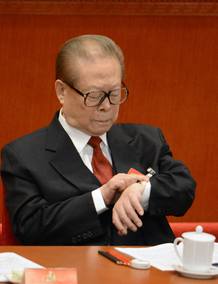
PHOTO: Former Chinese President Jiang Zemin in an archive imageAFP
EFE 18.03.2014
Judge Ismael Moreno has asked the Prosecutor's Office of the National Court if he should apply the universal justice reform to the five cases of this type that he has open in his court - among which the Tibet genocide stands out.- and , yes therefore, you should file them, according to legal sources.
Moreno He is the fifth of the six central investigative judges of the National Court who addresses the parties, including the Prosecutor's Office, so that they report on the effects on the universal justice cases being processed of the reform of the article 23 of the Organic Law of the Judiciary, that regulates that principle.
The Prosecutor's Office of the National Court could take a position in favor of keeping some of these cases open, taking into account that he has already expressed his complaint to the State Attorney General about this reform, understanding that it limits the investigation of crimes, lo que a su entender podía ser "en cierta medida" unconstitutional.
It is therefore possible that the Prosecutor's Office chooses ask judges to raise a question of constitutionality to this reform that limits the exercise of universal justice.
The judges of the National Court are resisting automatically filing the cases affected by the entry into force of the reform and even one of these judges, Santiago Pedraz, he refused this Monday ex officio, without consulting the parties, to file the Couso case alleging that the Geneva Convention prevailed over the new norm.
The same Friday the judge Eloy Velasco has already requested reports from the parties about the case in which the murder of six Jesuits, among them Ignacio Ellacuría, he 16 November 1989 in El Salvador, Pedraz did the same with the assault and burning of the Spanish embassy in Guatemala in 1980 and Pablo Ruz with its five causes of universal justice, among which are one on torture in Guantánamo or the genocide in the Sahara.
Five causes of universal justice
This Tuesday it was Moreno's turn, that has asked the Prosecutor's Office to issue a report on the five universal justice cases that it is processing: that of genocide in Tibet, en la que China ha expresado su "fuerte malestar" on several occasions for the international arrest warrants issued against several former leaders, among them former Chinese president Jiang Zemin.
Also the one relating to the persecution of Falun Gong followers, who practice a religion banned by China in 1999, as well as that of the CIA flights, in which Moreno investigates the possible stops at the Palma de Mallorca airport of CIA planes with suspected terrorists detained.
The other two causes on which you have requested a report are: the death in the Sahara of Baby Hamdai Bugema, a Sahrawi citizen of Spanish origin killed in riots in El Aaiún, and the investigation of four SS guards in the Mauthausen concentration camps, Sachsenhausen and Flossenbürg, who now reside in the US, and that was opened following a complaint filed in July 2008 by Spanish survivors of these camps.
EFE 18.03.2014
Judge Ismael Moreno has asked the Prosecutor's Office of the National Court if he should apply the universal justice reform to the five cases of this type that he has open in his court - among which the Tibet genocide stands out.- and , yes therefore, you should file them, according to legal sources.
Moreno He is the fifth of the six central investigative judges of the National Court who addresses the parties, including the Prosecutor's Office, so that they report on the effects on the universal justice cases being processed of the reform of the article 23 of the Organic Law of the Judiciary, that regulates that principle.
The Prosecutor's Office of the National Court could take a position in favor of keeping some of these cases open, taking into account that he has already expressed his complaint to the State Attorney General about this reform, understanding that it limits the investigation of crimes, lo que a su entender podía ser "en cierta medida" unconstitutional.
It is therefore possible that the Prosecutor's Office chooses ask judges to raise a question of constitutionality to this reform that limits the exercise of universal justice.
The judges of the National Court are resisting automatically filing the cases affected by the entry into force of the reform and even one of these judges, Santiago Pedraz, he refused this Monday ex officio, without consulting the parties, to file the Couso case alleging that the Geneva Convention prevailed over the new norm.
RELATED VIDEO: http://goo.gl/6vUuQ8