

16.05.2018
ROSER REYNER
Two of the protagonists of this report, Tenzing Branch I Palang Sherab,
comment on painters about the life of Buddha to the house of Tibet
Author/a: Roser Reyner
It's Wednesday evening. If it was a Wednesday any, At this time at the Barcelona Tibet House They should take Buddhist meditation classes.
But today is not a Wednesday any. And 25 April 2018 i, assuming it is still alive, The pantxen-lama complies with 29 years.
—This is the only photo that is preserved. Fa 23 years he disappeared —laments the director of the Tibet House, pointing to a poster where you can see a child's serious face with red cheeks.
I wonder what face must, today, that Ja Hauria of being a home.
Pantxen-Lama is the main spiritual figure of Tibetan Buddhism after dalai Lama.
They are considered that each other are very wise and evolved souls, which is reincarnating from person to person. Are also symbols of peaceful struggle for the survival of Tibetan identity against a colossal enemy: China.
El Dalai-Lama, surely the main emblem of Tibetans —more than the Himalayan mountains— has been living in India for six decades, As a result of the Chinese occupation of Tibet. In India he founded the Tibetan government in exile, a powerful bond of union for a diaspora of 150.000 people, and the nucleus from which an essential story is spread internationally for the subsistence of the Tibetan cause.
On the other hand, Pantxen-Lama was six years old and lived in a nomadic family when Dalai-Lama confirmed that he was not just a child, but was the eleventh reincarnation of the second sword of Tibetan Buddhism. He had to be in charge, When the time came, to locate the reincarnation of the current Dalai Lama, the fourteenth, that has 82 years and a few decades of life in front.
But the Chinese government did not take long to stop the child and also his family. And he chose another, more to their liking, that the Tibetans who remain on the so-called roof of the world must pretend to recognize in order to avoid reprisals.
since then, nothing more has been officially known about the genuine panchen-lama, although there are indications that he is alive. He is the most famous Tibetan political prisoner in the world. But not the only one. L’ONG Tibetan Center for Human Rights and Democracy has registered more than 5.000.
The ground floor of the Tibet House, an immense premises in Barcelona's Eixample that had been a car park, hosts the Panchen Lama's birthday ceremony. There is no shortage of cake, crowned with a large number 29 of chocolate.
—The number 29 it is dark because the panchen-lama is in darkness. The candles are red, of the color of hope, and we don't blow them, let's not turn off the light —emphasizes the director of the House of Tibet, the monk Thubten Wangchen.
I sit in the last row of chairs. in front of me, about seventy people, more or less the number of Tibetans who live in Catalonia today. But it's not them. Almost none of the attendees are of Tibetan origin. Rather they are followers of Tibetan Buddhism, or supporters of the identity and political cause. Or both, which are sufficiently mixed. Half have been col·located on the ground, in the meditative lotus position, with crossed legs. The other half, further back, in the chairs. We all go without shoes.
on a wall, dozens of golden Buddha statuettes.
At the ambient, first silence and then recitation of mantras led by Thubten Wangchen. It emits some serious sounds, ancestral, quasi gutturals, that flood the room. He officiates the ceremony and is accompanied by another Tibetan monk. From nuns of Tibetan origin, a Catalonia, no n'hi ha, although there is a good group of nuns of Catalan origin and Tibetan Buddhists.
But on the road, the real protagonist is the photo of the pantchen-llama, behind which is the ubiquitous image of the Dalai Lama. Both will have, as an offering, a piece of cake. The rest will be eaten by those present at the ceremony.
—Let three cops sing happy birthday! who starts? —Wangchen asks.. He chuckles and starts himself.
Un diputat magnètic a l'exili català
We met a few hours before, in the morning. He received me in his office. The amount of things it has caught my attention. Especially a kind of nativity scene with all animal figurines. They brought him an infusion, which didn't start until we had been talking for a good three quarters of an hour and we both needed to breathe for a moment.
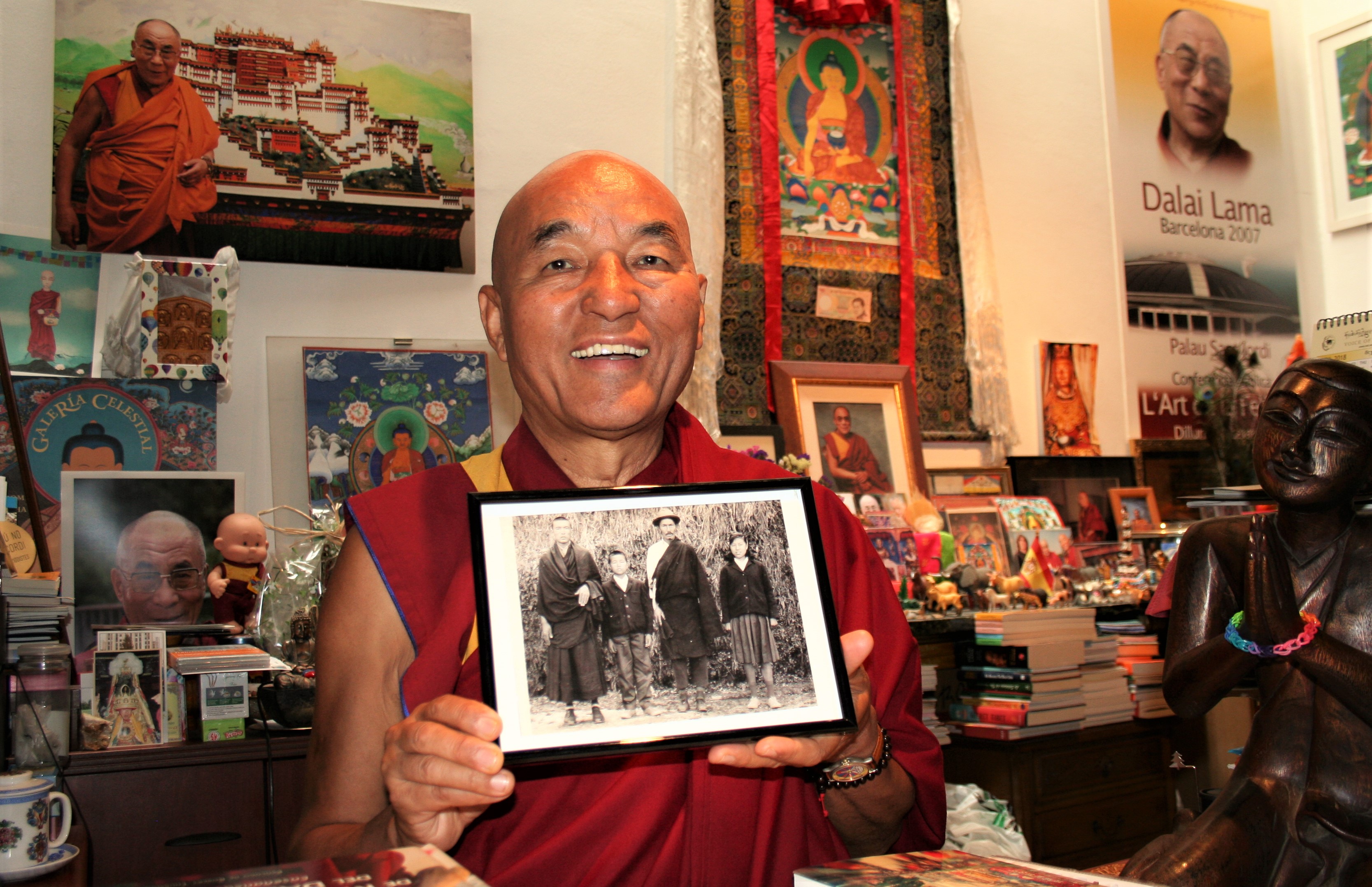 Thubten Wangchen, in his office, showing a photo where he comes out
(the smallest) with his father and his two brothers.
/ image: Roser Reyner
S’acosta als 65 years, but he looks younger. When it is explained, he often closes his eyes and sometimes touches his bald head. We talked a lot about politics and not so much about Tibetan Buddhism. Maybe that's why I found it more serious than on television. Be that as it may, He has not sent me any kind of hurry, and that, while we were talking, there was a queue of spontaneous people who wanted to meet him or take a picture with him.
Thubten Wangchen is the first Tibetan who stayed to live in Spain. The year passed 1982. His personal magnetism made it easy for him to fit in and be well regarded. He also helped him get money from private funds to build the Tibet House.
he is, in good part, the reason why today there is a col·Tibetan education in Catalonia, where neither the language nor the economic situation of recent years have made it easy for him, to this diaspora. It assures, but, that all Tibetans of working age who reside in Catalan lands are employed. the majority, and Barcelona, yes no, very close: they, in the field of restoration or the care of people or homes; ells, also in the hospitality industry, rather in oriental establishments and in many cases directly as cooks. And they are so few, that everything pretty much stays in the family, as we will see a few lines down. Of course, the economic crisis pushed some to leave for the United States, Canada or other European countries. In fact, they tend to have it easier where English is spoken: those who have lived in exile in India for a few years before moving to another continent are fluent in this language.
Thubten Wangchen speaks to me in Spanish. In addition to monk and director of the House of Tibet, since 2011 is one of the two European representatives in the Tibetan parliament, which has 45 deputies. He was elected thanks to the votes of his people 17.000 compatriots exiled in Europe.
Also, all Tibetans in exile elect a prime minister.
—The ones inside, no poden —rumination in veu alta.
—No. There are about six million of them and they can't even vote, nor talk, nor support —remembers Thubten Wangchen.
He explains to me that Tibetans in exile pay a kind of tax to their government: 28 euros per year for children between 6 i 18 years and 96 euros for adults —36 if they don't work. To this must be added the nine million dollars that come to them every year from the United States government. But neither this government nor any other in the world recognizes Tibet as a sovereign state.
Lama Wangchen's job is, so, much more than religious. It's politics. Although he prefers to define himself as an activist.
—Talking about Tibet is not politics, it is solidarity and defense of a people that is suffering. They voted for me but I haven't campaigned.
I ask them yes, as the representative figure that he is, is related to the Chinese consulate in Barcelona, located in a spectacular building on Tibidabo Avenue, outside of which he explains to me that he has led some demonstrations.
—what's up, what's up. They always control us, but we have nothing to do with them —answer forcefully.
Lama Wangchen helps me review a little of the recent history of his village. I will also be helped by two great connoisseurs of Tibet: Josep Lluís Alay, teacher of history of Asia of the University of Barcelona, i Francisco Navarro, Tibetan translator and ex-monk.
The story begins with the establishment, l’any 1949, of a socialist state in China.
At that time, the communist government of Mao Zedong is clear that it wants to keep Tibet. During the first decades of the 20th century, his predecessors had already tried, like the British Empire.
—Just after World War II, China is coming out of a historical period in which it feels badly mistreated by all the Western powers and by Japan. They want to recover the glory of the past empire, and with this aim they seek the maximum possible extension —Alay explains..
So, l’any 1951, the People's Republic of China occupies and pockets the Tibetan territories, unable to defend themselves. L'actual dalai-lama, very young and head of the politico-religious government of an independent Tibet since 1913 —with its own currency and flag—, is forced to accept an annexation agreement.
then, the sovereignty and identity that the Tibetans invoke comes from what they were at the beginning of the 20th century?
Navarro reminds me that the story begins much earlier, to the VII century.
—At that time, a fully sovereign Tibet reaches a great cultural level at the hands of great military and economic power, and compete head-to-head with their Mandarin neighbors —shells.
From 1951, relations between the Tibetans and the Chinese government that administers them are strained. March of 1959, the dalai lama refuses to attend an event to which he had been invited by the chinese because it transpires that his security may be at risk; all this generates the uprising of the Tibetan people in Lhasa, the capital; in the following days, the Tibetan leader flees to India, on demand asylum. The rebel·lion in Tibet spreads and the Chinese authorities crush it militarily. I, to summarize it very much, from that moment to the present day there are four major aspects that have not changed:
- There is no agreed solution to the conflict
- Tibet is not recognized as part of China and has an Indian government-in-exile
- Tens of thousands of Tibetans end up fleeing the roof of the world
- And China exercises intense repression on those who have not left or decide to return
Of the hippies at the Tibet House
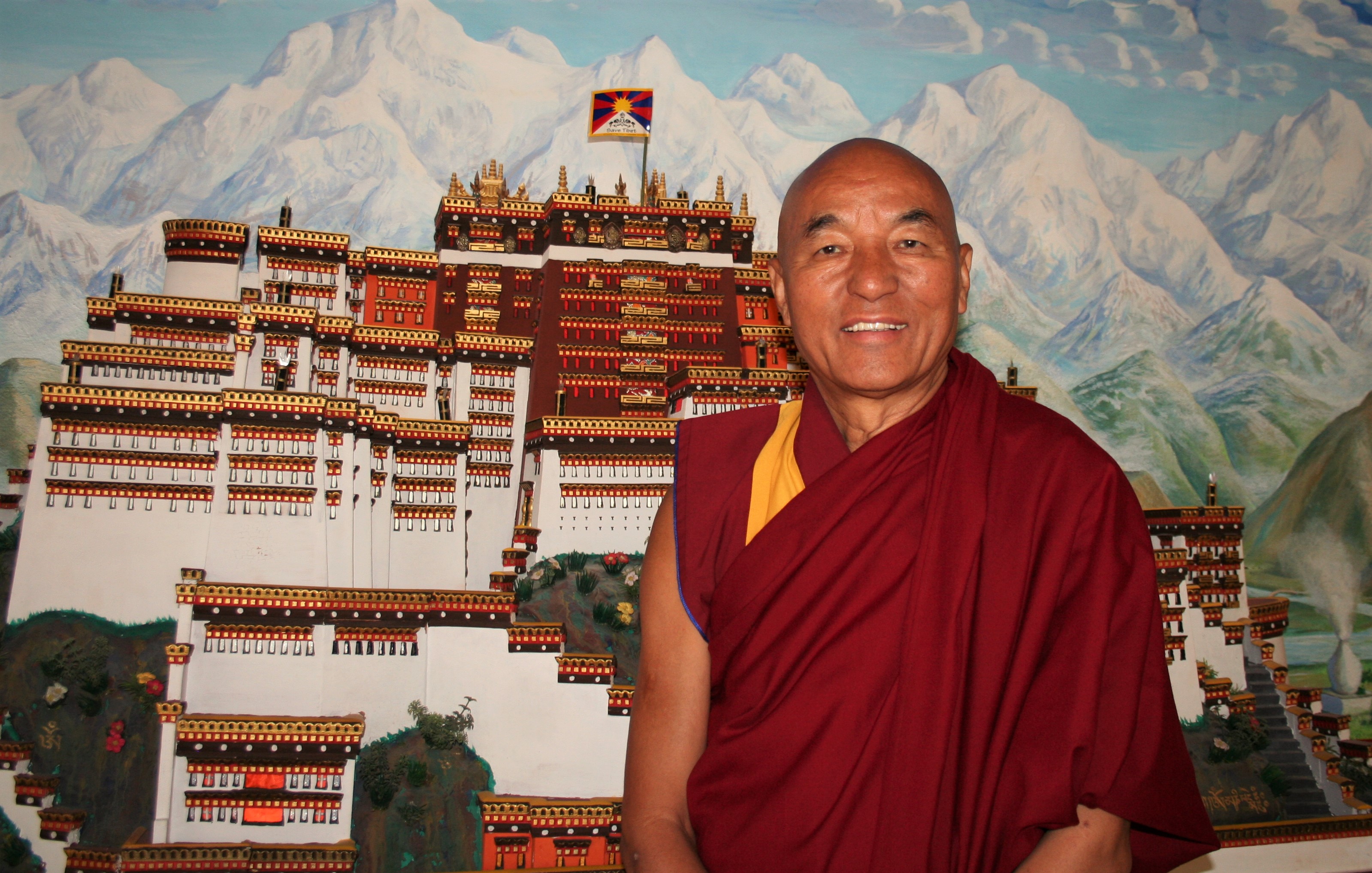
Lama Wangchen, in front of the image of the palace of Potala, in Lhasa,
who presides over the Casa del Tibet in Barcelona. / image: Roser Reyner
—It was not like Puigdemont, who escaped by car and arrived in Brussels·THE. That was going up and down the Himalayas on foot —explain to me, serious, to understand that it was an odyssey.
To avoid being seen, they have to move at night. They arrive in Kathmandu, the capital of nepal, where they beg and sleep on the street. Until the father hears that the Dalai Lama has arrived in India.
—The Indian Government let us in without checking, you showed, ni passaport, no transport bitlets. Even now, they are very kind to Tibetans —remark.
After a while, in that India that had become independent from the British just over a decade ago, schools for Tibetan children begin to be created there, which still exist today and which are key to preserving their own language. English and Hindi are also usually taught there.
Lama Wangchen studied at one of these schools until he had the opportunity to enter a monastery where he had direct access to the Dalai Lama.
—At that time, many came near the monastery hippies. They found free marijuana, that I didn't even know what it was, and at the same time they met yoga, the meditation, buddhism. A group wanted to set up Buddhist centers in Spain, and they were looking for a monk who spoke English.
This is the first reason why Lama Wangchen came to Spain. After, by order of the Dalai Lama, he ended up founding the Casa del Tibet in Catalonia. It took him a while. But he succeeded.
—In the years 80 i 90, in Catalonia there were five or six Tibetans —remembers Thubten Wangchen—. From 2000 more came. But we are few, most have gone to France or Switzerland; it's easier there —diu.
I ask him why they come.
—They are refugees who were in India or Nepal, where life is good, but there is not much future. The future would be to return to Tibet, where we ask for autonomy —Explain.
For years, the dalai lama claims that he would return to a more autonomous and not independent Tibet.
On a trip to India 15 years ago, Thubten Wangchen goes to collect, d'una school for Tibetan infants, a girl whose mother was waiting for her in Barcelona.
WeChat and Swiss dreams
The girl was Palyang Sherab, that he has today 27 years.
We are in the House of Tibet itself. The building is also the seat of the Tibetan community of Catalonia, an organization that acts as a cushion for newcomers and that organizes celebrations, demonstrations or Tibetan classes on weekends.
In one of these meetings, Palyang met his partner there, Tenzing Branch, two years younger than her and born in India.

Palyang Sherab i Tenzing Sangay, at the Tibet House, and Barcelona.
/ image: Roser Reyner
Badass, instead, was born in Tibet. When I was five years old, mother left her in Lhasa, in charge of the rest of the family, and escaped to India.
—My mother wanted a better life, run away from all the problems of Tibet —diu.
A few months later, on a supposed tourist trip, an uncle accompanied her from Tibet to Nepal and from Nepal to India to be reunited with her mother.
The bus ride with his uncle is Palyang Sherab's first life memory: of the roof of the world has no conscious memory of it. But the rest of the family still lives there and they usually communicate via mobile phone:
—There is a Chinese app, what is diu WeChat, and we talk on video calls and everything.
I ask if they can say whatever they want, freely.
—It is quite controlled.
No photos of the Dalai-lama, nor the Tibetan flag, ni sentences with “Free Tibet”.
—If we sent it, something could happen to them —diu, ras i curt.
This is confirmed by everyone I talk to. I ho denuncia el Tibetan Center for Human Rights and Democracy que, their annual report referent a 2017, It emphasizes the effects of political re -education campaigns and so -called mass surveillance programs. These programs include the use of facial and voice recognition technologies to identify peaceful dissidents.
She inform, The NGO Documenta blatant violations of fundamental right to freedom of expression, as well as arbitrary arrests and torture and clear restrictions on religious freedom.
—Having a Tibetan flag can be convicted of seven years in prison —il·luster Josep Lluís Alay.
I ask him and Francesc Navarro what do they consider that, today, are the Chinese government's main repressive actions against Tibetans.
—The internal control of movements. There are people who cannot move from one province to another without special permission from the authorities. In many cases this permission is never granted —begins Navarro.
Tibetan territories are distributed, in China today, between the so-called Tibet Autonomous Region and four provinces.
Also, Navarro continues, foreign visitors are controlled, who must travel in groups and not leave the authorized tourist routes.
He has experienced it first hand, like Josep Lluís Alay.
—In addition to the visa, you need a special permit, which they give you with many restrictions. Before the 2008, This was only needed to reach the Autonomous Tibet. since then, So is it usually to go to other Tibetan territories —Details Alay.
He 2008, the year of Beijing Olympics, represented a turning point. Des del 10 March, several communities of Lhasa religious protested peacefully to commemorate, one more year, The date on which Dalai-Lama had to leave Tibet. Chinese repression of these protests was forceful, for example forcing religious to be locked up within their monastery. The tension went up until the Tibetan community of Lhasa got up in violent protests, largely against Chinese business. They died about twenty Chinese origin. Protests spread through the Tibetan territories. Paramilitary and military troops entered Lhasa and, According to Alay in his book Tibet, THE COUNTRY OF THE NEU IN FLAMES, They crushed the Tibetan population, causing as a minimum of two hundred deaths.
Repression has always been very hard, Alay remarked. But he points out that from the 2008 There have been changes. For example, Foreign tourism has been reduced to Tibet and has increased Chinese tourism, that occupies the great Majoria de Reerves. Also, before the 2008, In the Autonomous Region of Tibet there were more repression than in the provinces, where in the last decade it has intensified. Arbitrary arrests have gone beyond political opponents and affected people who defended the need to preserve the Tibetan language:
—There are writers, singers, people of traditional and popular culture in prison —warns.
—There is little or no interest in teaching the Tibetan language and currently its risk of cabbage·Lapse and Alarman —Add Navarro.
Both match, also, than interference in Tibetan religious affairs, such as control and restriction of monks and nuns in monasteries, is another usual strategy of repression. In that sense, One of the most dramatic cases of recent years has been the demolition of houses and the expulsion of religious from one of the main Tibet Buddhist teaching centers.
Des del 2008, Freedom of movements is more limited and Tibetan diaspora has practically stopped. Also dozens of immolations of Tibetan citizen, religious, that are burned desperate for their situation.
Away from all this, and without being able to talk openly with the family living in Tibet, Palyang Sherab studied a vocational training cycle related to tourism and now works as a waitress in a hotel. Speaks perfectly Catalan, Spanish, English, tibetà i hindi. He also knows a little bit of korean, Because he likes to look over the internet series in this country. A catalunya, went to high school with Chinese colleagues.
—I had a Chinese friend —clarify—. The problem we have is with the Chinese government, not with the chinese —he tells me bluntly.
It is considered Tibetan Buddhist, but not as practicing as her mother, that every morning he stops for a while in front of the altar of Tibetan bowls he has at home, before going to clean other homes.
She says her mother's mindset about being a woman has changed over the years. For example, Palyang doesn't live with Tenzing yet, but they say they would have no problem sharing a home without being married.
—And the children… —I point.
They laugh.
— If I have children, above all I want them to know the Tibetan language and culture —diu Palyang.
—what is, for you, tibetan ser? —li asked.
—It's a good question —he says laughing—. Be from there and… how to say it… it is a spiritual concept. When I say I am from Tibet, people say: “Ah Yes, El Dalai-Lama”.
He looked at Ell.
—Jo… is that I am half Nepalese, half a Tibetan, me indi, Half Catalan, Me Espanyol. I speak Tibetan, But I feel a little bit of everything —Confesa tenzing branch.
His father fled from Tibet. Her mother was born in India in the year 1959. Believes that grandmother, pregnant, had escaped from the roof of the world that same year. Her parents have always worked in the field of restoration, In India and Nepal. Pending, The owners of the second Tibetan restaurant that opened in Barcelona, he Potala, They proposed to the father to be a cook. And to this day. Ll, a family -owned process. I pendent, still, the Spanish passport.
Anyway, Neither Palyang Sherab nor Tenzing Sangay intend to return to Nepal or India..
—When I have a passport, I will go to live in a better country. Swiss —he says.
I ask him what Switzerland has that Catalonia does not. A few moments of silence and she answers.
—There are many Tibetans there. I have many childhood friends there, of the Tibetan school, to l’India. We communicate by Whatsapp, Facebook or Instagram. We are very much in touch. Here we are few and there we feel more… more tibetans.
Surely the high mountains and the climate also help.
Te salat and civada soup
If Tenzing's father is a cook at the second Tibetan restaurant that was set up in Barcelona, he is the other's waiter, he Kailash, the first to be launched. In fact, Everything is left with the family, Because the owners of the two establishments also have blood ties. Things to be a cabbage·so small.
Tenzing Sangay Farà translator for such that the matriarch of the kailash and joles..
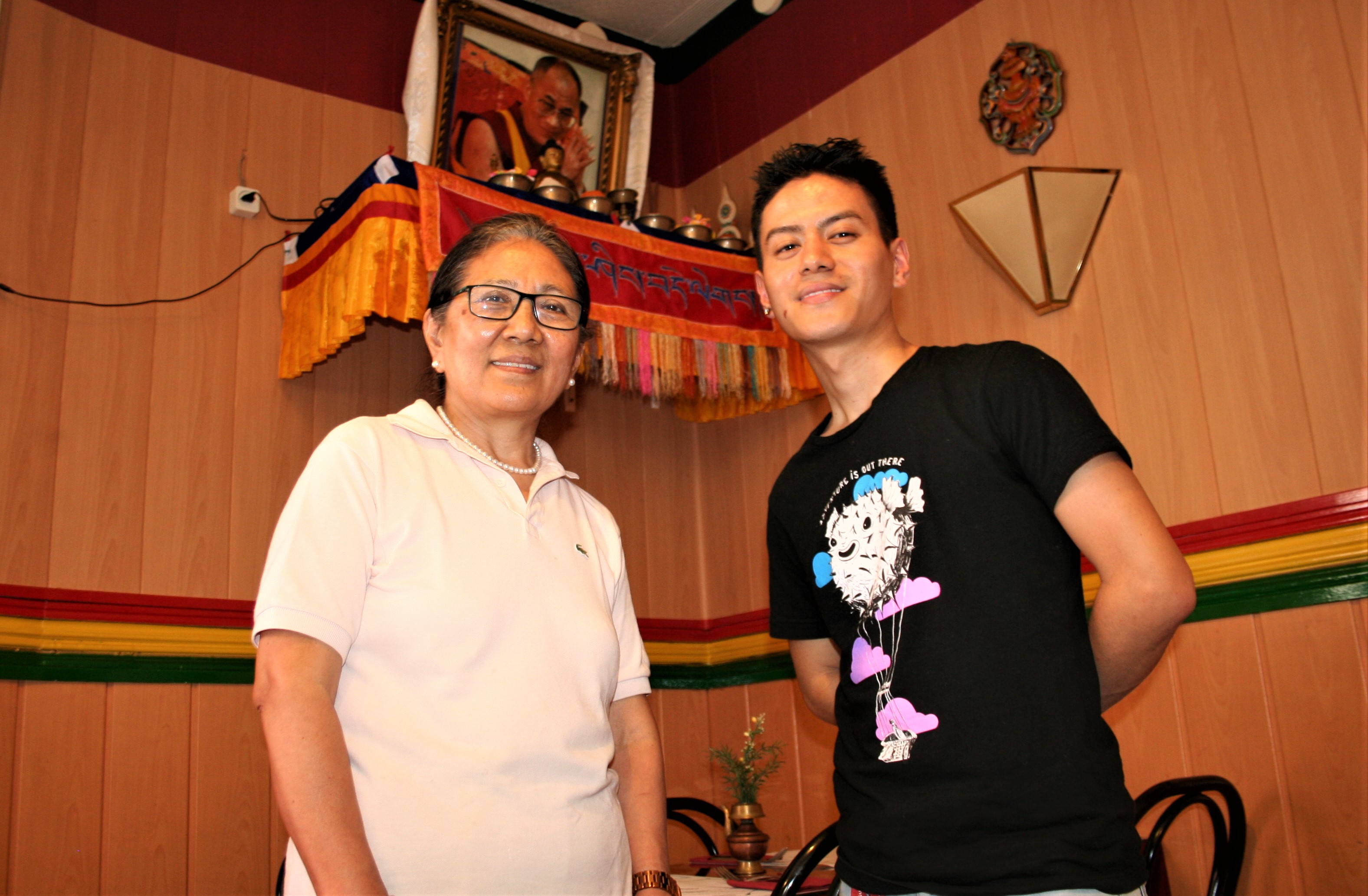
PASSANG SHESTRA I TENZING Branch, al -kailash, The first restaurant
Tibetan who opened in Barcelona. / image: Roser Reyner
It is said Passang Shestra, has 63 years and she does remember what happened when at the age of eight had to flee from Tibet:
—My parents were very scared. We lived in the field, They had done nothing, But they were killing monks. I had four brothers, TOTS NOIS. Three of them stayed with parents at Tibet. To the other brother and me, Dad accompanied us to the Nepal border, where was someone of trust that could welcome us.
Mother no longer saw her again, Because the only time he has returned to Tibet, he 2007, camouflaged between a group of tourists, she was morta.
Those early years in Nepal, Passang Shestra had to work to help hold the people who welcomed him. After, by indication of his family, He married who is still her husband, who then studied Tibetan medicine and worked for a while by the Tibetan government in exile. Ell, For his job as a doctor, still travels a lot, And in fact it was in one of his stays in Catalonia that he decided to come to live in Barcelona and bring the family to it. I knew the Wangchen Lama, Because they had lived in the same village of Tibet.
Per to her, that passed from the 40, The language was an important obstacle. At that time there were still few Tibetan families in Catalonia and was one of the promoters of the Tibetan community. Remember that, to the Principi, to earn some money and start the entity, they participated in fairs where traditional food came.
Al restaurant, simple and quiet, The clientele is mostly western. They tell me that before the crisis people queued up, on weekends. After, The thing went down a lot and now he has come up, But they assure that it is not the same. In fact, The son who managed the premises left with his wife in the United States.
Ara they do not, Tenzin Lhamo, and her husband, Ngawang Topgiyal.
I ask Passang Shestra to recommend the best delights of Tibetan cuisine. And tells me that:
- Momo: are steamed pies, of meat or vegetable, that also do other oriental peoples, Although Tibetans cook them with beef.
- Shabtak: beef with Tibetan bread.
- Zero thug: oats soup, with cheese and salt.
- I, certainly, The Tibetan tea: you are black, with butter, milk and salt.
Passang Shestra is fine, a Catalonia, But the last years of his life wants them to pass near his usual friends and the Tibetan Buddhist monasteries, To the house that tea to Nepal.
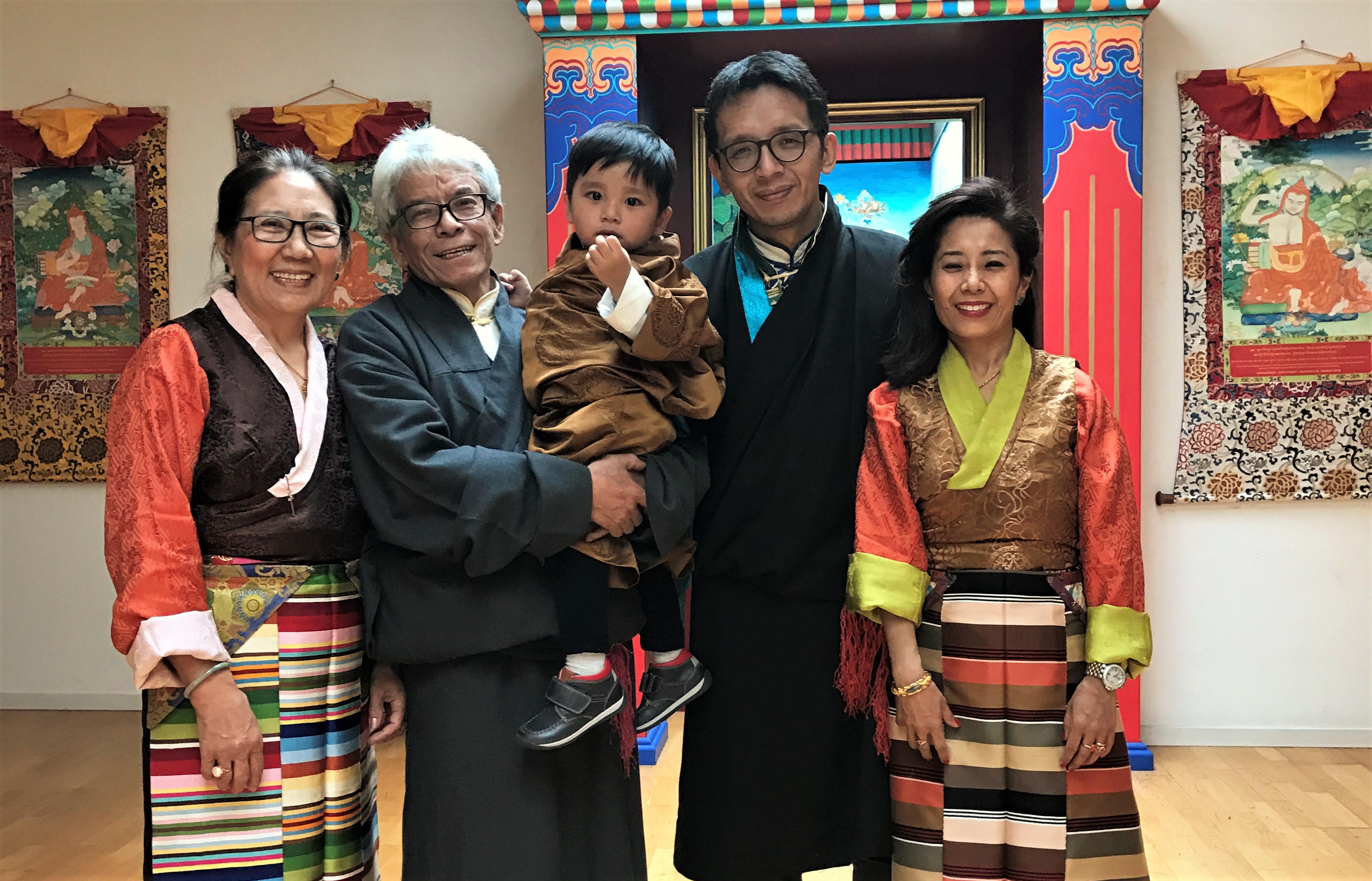
From left to right, Passang Shestra, her husband, their grandson, his
son -in -law (Ngawang Topgiyal) and her daughter (Tenzin Lhamo), with the
Tibetan traditional clothing. Married women carry this
type of striped apron over the dress. / image: Ngawang Topgiyal
Passang Shestra's daughter, Tenzin Lhamo, has 40 years and is the restaurant's mistress. She doesn't sap yes, To the Llarga, He wants to stay in Catalonia.
—We have no plans. We cannot say what will happen. So far, We are fine. The business, va —Explain.
Speaks quite well Spanish, But he feels more comfortable in English. While their parents lived in Nepal, She studied in several Indian centers for Tibetan children and young people. Later he could meet Switzerland, in vacation, and then Italy, where he ended up living three years to study Italian and work as a kangaroo. And then came to Barcelona. Through the Tibet House, diu, has made friends with Catalan families.
Has never visited the Tibet. It is very, very difficult, in Diu. Although you have a passport and a visa, The tibetan name delights them and that does not help. But he wants to do it. Explains it excitedly.
—In this life, I really want to visit my country.
We talk about a while about the complications that Tibetans have to move around the world. Some have a document that proves that they are Tibetans, a green card. Some, When they reach foreign countries, They try to achieve refugee status. And some have Indian or country nationality or the country where they have gone to live.
It tells me that, For his two -year -old son, the third generation, They found a kindergarten where all classmates are Catalans. They have not expressly done, was fine for family logistics.
—Now you already know how to count from the 1 to the 10 In Catalan and Tibetan, and in English to 20 —proudly recounts.
We also talk about her love story with her husband, Ngawang Topgiyal, that is not any story because he, before, It was Monjo.
—Tibetan women never look at a monk, due respect —assure—. When I was a monk, We were very friends, As with the Wangchen Lama. Then he stopped being a monk, and after four or five years we are… be together. I knew him very well. It was easy.
Ngawang TopGyal works on the Tibet House team and also at the restaurant. Reserves a while to tell me your story.
—I must have some 44 years. I don't know for sure. My parents met, Or maybe they made them together, in a refugee camp near the Everest. There, After Chinese invasion, Many Tibetan people took refuge. There I was born and lived there for almost ten years.
After, Parents left Kathmandu, the capital of nepal: he to make tailor and she to weave mats. At Ngawang an uncle proposed to leave India.
—Now that I think about it, I said yes because I made me il·Lusion traveling by bus. I didn't know where he was going or what he was going to do.
Ended in a monastery, student to be a monk. Passed there almost 15 years. Until he contracted tuberculosis and had to be admitted for a year in a hospital, Where a Basque doctor who volunteered to move to move to Barcelona for a while: The weather and health would help you recover. A copy here, Life, a Catalonia, made him see things differently.
—Looks like an excuse, Because you can be a monk everywhere; But it was no longer in the monastery, did not do the necessary practices, And I told me I would have the same attitude, but he left it.
I ask him about the situation of Tibet and talk about Chinese children who live in Catalonia and who are the age of his son.
—They may be those who change China and Chinese government. Children in the middle class. These children will know what freedom is. But it will take long.
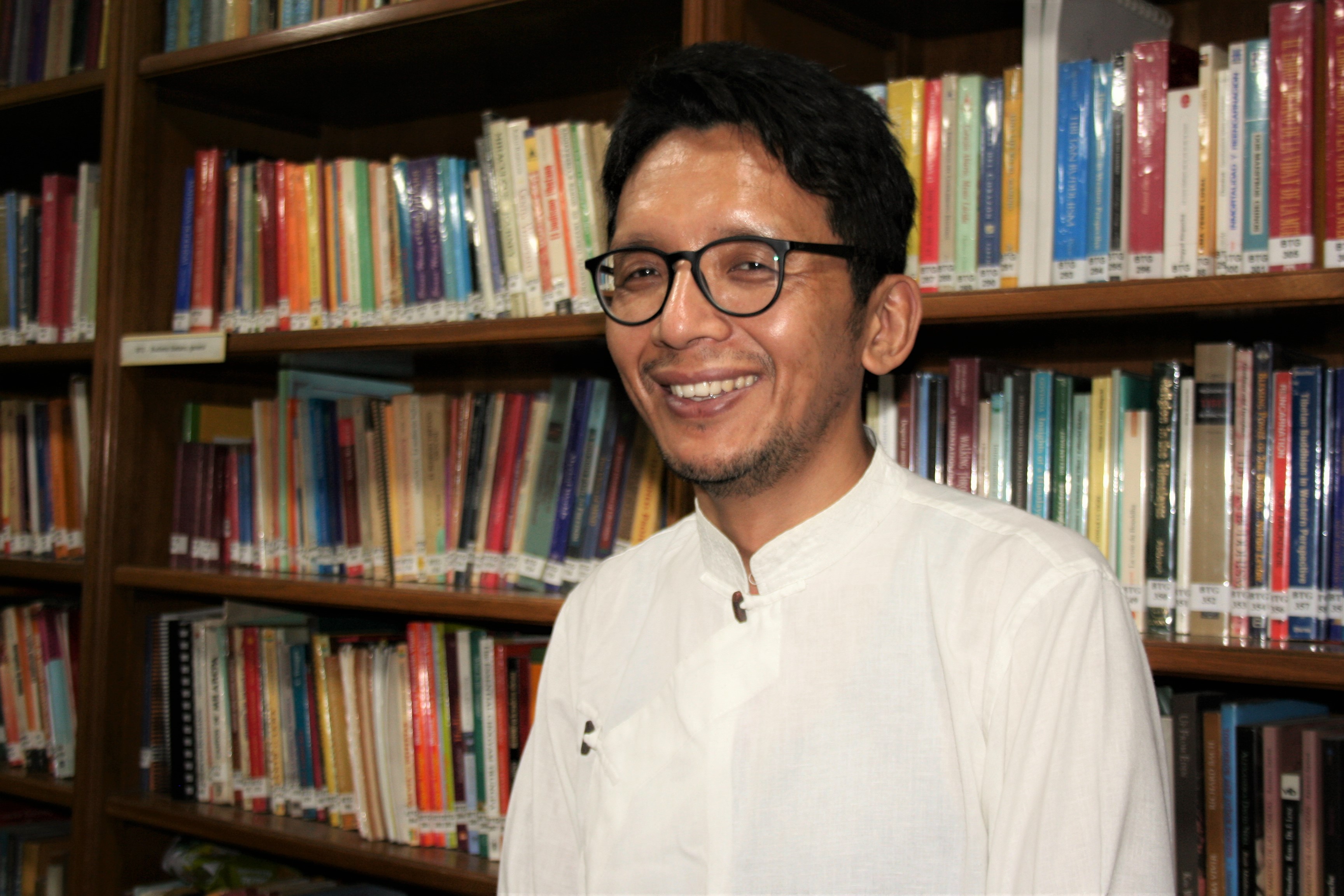
Ngawang Topgiyal, To the Library of the Tibet House. /
image: Roser Reyner
Only, Why is Tibet so important for China, as to continue to exercise this ferry control?
Josep Lluís Alay seeks to clarify it in his book, where it underlines that, more than the roof of the world, Today there are experts calling the Tibetan territories the Third Pol from the world.
The main reason is water. It tells me.
—By the mid -20th century it was already there, But maybe it wasn't that strategic. In the 21st century we are experiencing a great development of China, India and Southeast Asia. They need water for their industry, growing and accelerated, and to feed their populations […]. Water is the appeal for excel·Lice of the 21st century, and the most developed Asia faucet is Tibet.
And there are two more things. The first, the minerals.
—Resources that no one imagined that they would be in Tibet or that they would have the applications they have in technology today. I always posse the exemple of the Liti. Mobile phone batteries are made with lithium salts, laptops and cars. Much of China's development has been thanks to the fact that it has the raw material for making batteries. China's lithium reserves are in Tibet, and they are among the most important in the world —Alay explains..
And second: the borders.
—If China had not occupied Tibet, would not border India. For China it is a very important strategic resource. It was then, and it is now, when they have become the two great powers of Asia —concludes the historian.
Exploiting natural resources has been one of the reasons that have led China to build infrastructure in Tibet and to displace the nomadic population that transited through certain areas of the Tibetan plateau, some considered sacred places.
I wonder if the Tibetan representatives could have done something better so that the wind would have gone more in their face. Navarro and Alay give me their opinion.
—I dare not say it —Alay's response—. Societies are plural and there are different ways of adapting to complex historical moments. The Dalai-lama is going to hold out 51 al 59 coexisting with the Chinese, and realized it was impossible. That society also had its own problems: people who wanted to isolate themselves more from the world, people who wanted to open […]. Surely they did not think things would change in such a brutal and radical way.
—I'm sorry to say that, When Tibetan representatives in exile say Tibet was a paradise, a xangri-la, before Chinese occupation, are not faithful to historical facts. Tibet has had many conflicts and civil wars throughout its history; little, not just civilians, but also religious —Navarro points out.
We also talk about Tibetan guerrillas.
—Tibet had an army and guerrillas, when 60, They continue their role in underground and with the support of Americans. This, after, change, Because Americans change their strategy: “Now we will allise ourselves with Mao, Because Mao got angry with Moscow” —Luck Escape.
—From my point of view, the approval of the use of violence by the Tibetan government to oppose the Chinese invasion was a monumental mistake. Images of monks taking up arms and CIA funding and training of Tibetan guerrillas are unfortunate facts. I understand that every individual, population or nation has the right to protect itself, but starting wars that are impossible to win is a fatal mistake, and in the case before us I fear that it fueled the policies of repression even more. Potser van pecar d'ingenuïtat i van pensar que els Estats Units s'implicarien molt més i que calia resistir tant com fos possible —says Francesc Navarro for his part.
And the immolations?
—I understand the pain and despair that someone has to suffer to choose this pain so painful, and I think this is the message they want to convey, But I don't share this protest strategy at all. I think Tibetan authorities in exile have not been clear enough to disavow these types of protests —Navarro points out.
—Individually it is very difficult to criticize a person who does this… But it is true that effectiveness is minimal. He has virtually no echo. But I think the government in exile and dalai-lama do their best to stop —opi.
Tibetan Buddhist Chinese
To these heights, I have already understood that, probably, The main feature of Tibetan identity is the language. Also the territory of origin.
But so is Tibetan Buddhism, they follow the vast majority. This is the case of all who live in Catalonia. They usually practice it in privacy or well at the Tibet House, When each full moon or New Year joins.
With everything, In Catalonia there are dozens of Buddhist centers and two monasteries. And is that, According to the data of the Barometer on religiosity and management of their diversity of the Generalitat, about 1.3 % of the Catalans majors of 16 Years are defined as Buddhists.
—We don't know how many of them follow Tibetan Buddhism, Although it is likely to be a fairly high percentage —They explain sources from the Directorate -General for Religious Affairs.
I'm talking, also, with sources in the Tibetan Buddhist community in Catalonia. They prefer not to identify themselves. They tell me they haven't visited Tibet because, today, Her teachers are in India where, actually, This philosophy was born.
I ask them if, someday, Dalai-lama or pantxen-lama could be women.
—Culturally there was no tradition of following reincarnated women. It will take you to see —they call me.
Of course, They remind me that, al Tibet, There are very eminent nuns. For example, the one that governs the monastery of Larung Gar, where the Chinese government has demolished housing and expelled religious in recent years.
They add that in Tibet there is religious repression, Yeah, but also a relevant counter -current:
—In China, the population of Buddhist Chinese is greatly increasing, they follow Tibetan masters —they underline.
We will have to see what impulse this tendency to the Tibetan cause.
(L'elaboració d'aquest reportatge ha comptat amb el suport de la direcció general d'Civic and community action of the Department of Labor, Social Affairs and Families of the Generalitat de Catalunya and theGlobal Justice Directorate and International Cooperation de l'Ajuntament de Barcelona.)
Author/a

Roser Reyner
Journalist. He has worked in various media and also with the Vicente Ferrer Foundation in India. He has been responsible for communicating a public hospital for more than six years and currently also·Labora with the Open University of Catalonia and the Ramon Barnils Journalists Group.


