

He revealed to the world the horrors of the centers, in which he was imprisoned 19 years
Xavier Fontdegloria
1 MAY 2016
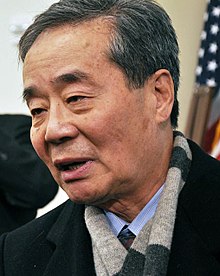 Human rights defenders in China have lost one of their main references. Harry Wu, the man who spent almost two decades in several forced labor camps in China and dedicated the rest of his life to denouncing the brutal conditions of these centers, died on 26 from April to 79 years in Honduras, while spending a few days on vacation with his friends.
Harry Wu, originally Wu Hongda, born in 1937 within a wealthy family in Shanghai. To the 23 years, while studying at university, He was branded “unrevolutionary.”” when he criticized the Soviet Union's invasion of Hungary, then one of the main allies of communist China led by Mao Zedong. For this crime he received a life sentence in forced labor camps., known in the country as laogai.
Passed 19 years in a dozen centers and was released thanks to the timid reforms that were carried out after Mao's death. Years later he managed to leave China and emigrated to the United States., where he went from Wu Hongda to Harry Wu, He led a crusade to denounce the hell he had experienced and became one of the greatest exponents of the defense of human rights in China.. “I am happy to be a troublemaker for the Chinese Communist Party.”, because the Chinese Communist Party is a troublemaker for democracy and freedom.”, said from exile. He wrote numerous books and created the Laogai Foundation to explain to the world the parallels between the labor camps in China with the Nazi concentration camps and the Soviet gulags.. Many compared Wu to Alexander Solzhenitsyn, the Russian writer who won the Nobel Prize in Literature who recounted the atrocities of these centers.
Harry Wu narrated in his books how his years as a prisoner turned him into “an animal”. He denounced the hard work days, beatings, torture and explained how several of his companions died of hunger or committed suicide. He himself came to regret 36 kilos. There are no official figures, but it is estimated that millions of Chinese died in these facilities, spread throughout the territory, in conditions of semi-slavery.
In order to explain these abuses, Wu returned to his home country several times to obtain information and images of what was still happening behind the high walls of the laogai.. On one of these visits, in 1995 —when I was already a US citizen—, The Chinese authorities accused him of espionage and revealing state secrets and he received a sentence of 15 years of prison. Months before, his testimony and images had gone around the world thanks to his participation in various documentaries.. An intense political and diplomatic campaign forced her deportation just before the fourth World Women's Conference was held in Beijing., in which the then American first lady Hillary Clinton had threatened not to attend if the Harry Wu case was not solved. From exile he continued to denounce, in addition to the existence of labor camps, the one child policy, the death penalty or organ trafficking. He showed his support for the Dalai Lama or the Nobel Peace Prize winner Liu Xiaobo, still in prison.
At the end of 2013, China announced the end of the laogai and began to free more than 160.000 locked up people. Currently, however, the country's security forces are still capable of arresting, arbitrarily and without prior trial, to any citizen who they consider is “creating problems”. Wu already expressed his skepticism then: “China is a communist regime. As such, "They need a system of repression.".
Harry Wu, en Washington, in 2011. / AP


