

Los tibetanos lamentan que se les 'acaba el tiempo'
Un siglo de 'genocidio silencioso'
Monasteries and villages surrounded by thousands of soldiers. Refugees having frozen limbs amputated after fleeing repression across snowy mountains. A hundred monks sacrificed since 2009 in an attempt to draw the attention of the international community. "Vivimos una tragedia", assures the Tibetan prime minister in exile, Lobsang Sangay, that days ago suspended the Lunar New Year celebrations. "No tenemos nada que celebrar".
Tibet turns 100º anniversary of the proclamation of its independence, he 13 February 1913, in the middle of an existential crossroads. The Dalai Lama believes that the destruction of his ancient civilization could be irreversible in the face of what he describes as "genocidio cultural". The massive migration of Chinese settlers, repression and imposition of Chinese education are marginalizing Tibetans, their traditions and beliefs. In places like Lhasa, have become a minority.
Las dozens of suicides in the autonomous prefectures of Aba and Ganzhi have become the latest and most radical opposition movement against Chinese rule. Beijing has responded by putting 1.800 Tibetan monasteries under the management of mixed commissions made up of religious considered less belligerent and communist officials. In recent days, the authorities have sentenced dozens of alleged collaborators or promoters of the immolations.
None of this has managed to stop the revolt of the bonzes. The monks' actions are part of a hardening of the Tibetan stance, whose population begins to openly question the strategy of peaceful resistance and renounces the independence imposed by the Dalai Lama, favorable to accepting autonomy within China. The youngest, organized from exile, they lead the 100th commemorationsº birthday, converted into a symbol of more ambitious nationalist aspirations. "Los tibetanos izaron su bandera nacional en 1913", says Dorjee Tseten, director of Students for a Free Tibet. "Es hora de hacerlo de nuevo".
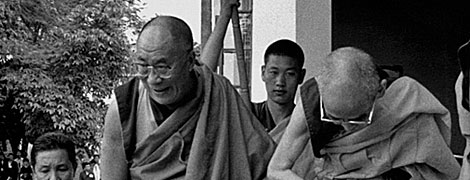
The Dalai Lama. | On. L. Soto
The declaration of independence was decreed by the 13th Dalai Lama upon his return to Tibet after the fall of the Manchu dynasty in China.. "Somos una nación pequeña, religiosa e independiente", Thubten Gyatso then said, restored to his position. The dream soon faded. The arrival of communism in China in 1949 was followed by a new subjugation of Tibet which was accompanied by the destruction of thousands of temples - often used as target practice -, the imprisonment of opponents and the exile of the 14th Dalai Lama.
Chinese authorities assure that their dominance of a region they consider theirs has brought economic development, hospitals, infrastructure and schools, improving the life of the population and erasing the feudal and theocratic past that ruled under the lamas. Chinese propaganda has named Lhasa, The Tibetan capital, "la ciudad más feliz" of the country four of the last five years. "Su cielo es el más azul, its clouds the whitest, el agua la más limpia y su gente la más feliz", Che Dalha recently said, secretary of the Communist Party in the Tibetan capital. "Las relaciones étnicas son armoniosas".
The Chinese government does not allow journalists, NGOs or international organizations verify for themselves the supposed satisfaction of Tibetans. Access to the autonomous prefectures of Aba and Ganzhi has been blocked for months.
ELMUNDO.es is prohibited from entering the country since in March of last year he skipped those controls to report the rebellion of the monks. The international community remains silent in the face of the siege imposed on Tibet, Today more than ever, a victim of the geopolitical changes that have turned China into an economic and political power. The priority these days is trade with Beijing, not the human rights of the five million Tibetans. A growing number of them have come to the conclusion that the only way out is actions like that of Kalsang Kyab, the young man of 24 who doused himself with kerosene in November before setting himself on fire outside the local government headquarters in Kyangtsa, in Aba prefecture. "Es mi deseo que el sol de la felicidad resplandezca sobre Tíbet", had left written.
The new heroes of the cause
The bonzes, which include minors, They are seen by the local population as the new heroes of the cause, honored as martyrs despite the lack of effectiveness of their protest or that religious leaders consider it contrary to Buddhist practices. The Tibetan government in exile says it is not in favor of immolations either, But their condemnations have so far been timid and have been accompanied by the justification that they are desperate acts of a repressed people..
China toughened its policy after the revolts that Tibet suffered in 2008, when a minority broke decades of peaceful resistance to attack Chinese businesses and communities on the streets of Lhasa. Beijing's response was to increase controls, sentencing the alleged culprits to death sentences and limiting the time dedicated to prayers, extendiendo los programas de reeducación destinados a fomentar "el amor por la patria". Photographs of the Dalai Lama, previously occasionally tolerated, are now systematically confiscated. All, from radio programs to the musical tone of mobile phones, remains censored. Y, however, Tibetans share the feeling that their greatest enemy is not the arrests or the siege of their monasteries, but time. "Se está acabando para Tíbet", according to the Dalai Lama.


