

Beijing prohibits access to the region on the grounds that tourists suffer from altitude sickness, on the anniversary of the revolt 1959
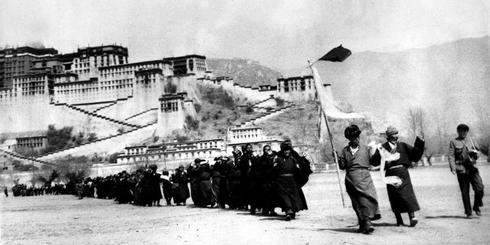
Tibetans remember two key dates on their calendar this month: the revolt they started 10 March 1959 against the troops of the People's Republic of China (RPC) -who controlled that mountainous territory since the military offensive they launched nine years before- and the day 17, which marks the day of the same year that the Dalai Lama fled to India, where he has remained in exile ever since.
Aware that March has been the scene of other serious protests inspired by the original and resorting to a common practice over recent years, Beijing has decreed the closure of that region to foreign tourists until next year. 1 April.
The local secretary of the Chinese Communist Party (CCP), Wu Yingjie, justified the restrictions days ago with a curious argument: se han aplicado estas medidas "para garantizar la seguridad" of tourists, ya que "algunos visitantes sufren mal de altura". "Muchos extranjeros nos han agradecido nuestra preocupación", He added.
No local journalist urged the official to explain how foreign visitors had faced this supposed problem for decades., since the elevation of Lhasa and its surroundings has not changed in recent times.
Organizaciones como la Campaña Internacional por el Tíbet de Washington opinan por el contrario que esta decisión "forma parte de la política general del Gobierno de China de restringir el acceso al Tíbet a los observadores independientes, with the aim of maintaining iron control over the region and, at the same time, evitar cualquier forma de escrutinio externo".
Wu Yingjie's intervention took place within the framework of the annual meeting of the Chinese Parliament that takes place in Beijing, a quote that, coinciding with the double Tibetan anniversary, has influenced the implementation of an extreme security device in the mountainous enclave, as reported by Tibetans living abroad.
The People's Republic of China recently announced a new plan to make the entry of tourists to Tibet more flexible., after the US Administration approved regulations last December requiring this type of travel to be facilitated under penalty of imposing sanctions on Chinese officials involved in the coercive measures..
Beijing's objective is to achieve the figure of 40 million foreign visitors this year, in front of the 30 million that he counted in 2018. Tourism represents a key reference in the effort of the Chinese authorities to promote the development of that region, whose economy grew 10% in 2018, According to official figures, well above the PRC average.
According to data released at the end of January, Tibet carries 26 años consecutivos creciendo con cifras de dos dígitos en una espiral fomentada por "la mejora de las infraestructuras y el boom del turismo", as the Global Times newspaper wrote. Beijing believes that improving the quality of life is a central argument in trying to eradicate any sympathy among the native population towards the Dalai Lama., although this does not prevent its security forces from also maintaining absolute control over towns like Lhasa., que presentan como la ciudad "más segura" of the Republic of China.
The suppression of nationalist sentiment also entails extensive surveillance of religious practices. In an unusual admission, the mayor of Lhasa, Go Khok, aclaró esta semana que las autoridades habían limitado durante el año pasado las actividades vinculadas a la fe budista para "eliminar la influencia negativa que ejerce el Dalai Lama a través de la religión".
Los responsables locales del PCCh emitieron un vídeo el pasado mes de enero en el que denunciaban a militantes de "dos caras", those they accused of maintaining their religious beliefs and, therefore, sus "simpatías separatistas", in expression of the aforementioned Global Times.
La grabación aludía a varios casos de cargos tibetanos del PCCh que habían sido expulsados de la formación al descubrirse que tenían "objetos ilícitos", the official terminology dedicated to Buddhist paraphernalia. "Tenemos que librar una batalla con el Dalai Lama y su grupo. Si algún miembro del PCCh tiene una actitud equivocada sobre este tema es un problema grave", the broadcast warned, which confirmed the stalking faced by the local population, including Beijing's own allies.
The aforementioned Wu Yingjie also attacked the Dalai Lama, de quien dijo que "no ha traído nada bueno al pueblo tibetano desde que desertó". "A pesar de que existe algún apoyo hacia él en el extranjero, los tibetanos se sienten muy agradecidos por la prosperidad que les da el Partido Comunista Chino", he added.
Although the main leader of Tibetan Buddhism has spoken out against the independence of Tibet and advocates coexistence with China, Pekín sigue considerando que es un "separatista" y "un lobo con túnica de monje", how they defined it in the past.
Known for his anticipation in preparing for the future, The Chinese Communist Party intends to appropriate the inheritance of the religious leader, and many analysts anticipate that Beijing will turn to its local Buddhist allies to appoint his successor., causing a foreseeable schism within this community when the exile sector names its new spiritual leader.


