

EFE – New Delhi
27/04/2016
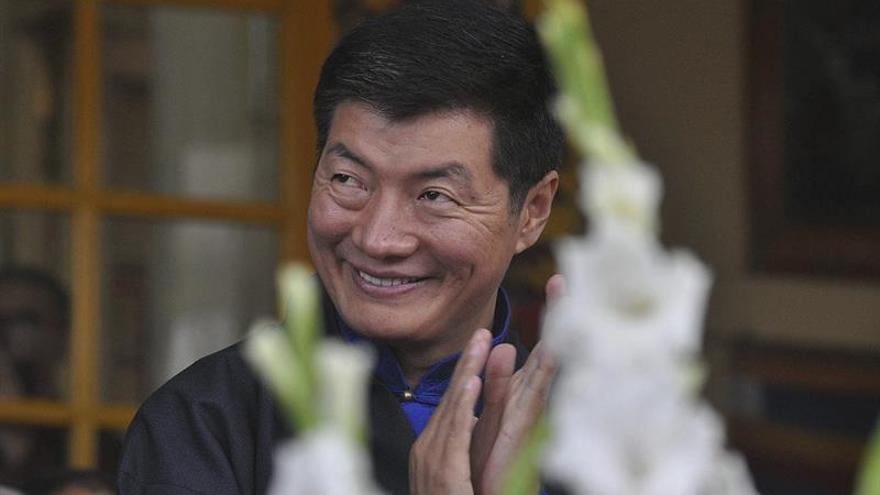
Tibetans re-elect Lobsang Sangay as leader of the Government in exile
The Electoral Commission of the Tibetan Government in exile today announced the re-election of Lobsang Sangay as prime minister, having received the support of the 57,08 % of those close to 60.000 voters who came to cast their vote.
"Lobsang Sangay, the current skyong (prime minister), ha sido reelegido por otro periodo de cinco años", the head of the Electoral Commission stated in a press conference, Sonam Choephel Shosur, according to a statement from the Central Tibetan Administration (CTA, in English) o Government in exile based in Dharamsala, in northern India.
In the elections held last March, Sangay obtained 33.876 vote (and 57,08 %), while his opponent Penpa Tsering, who holds the position of spokesperson of the Tibetan Parliament in exile, received the support of 24.864 voters (and 41,84 %), detailed Shosur.
The head of the Electoral Commission explained that although there are some 150.000 Tibetans in exile, solo 90.377 they registered to vote and of them 58.615 They participated in the second round, voting in sixty polling stations around the world., most in India, where is the government in exile, Nepal and Bhutan.
The voters also elected the 45 members of the legislature among representatives of Tibet, from the rest of the world and from different Buddhist schools and Tibetan sects.
While for Parliament it is the sixteenth election, In the case of the executive leader it is the fourth, the second after five years ago the Dalai Lama announced that he was limiting his leadership only to the field of Buddhism, outside of politics, lo que dio mayor relevancia a la figura del "sikyong".
This figure could acquire even greater significance after the Dalai Lama himself, of 80 years, has announced that he may be the last to exercise this title of leader of Tibetan Buddhism and the Chinese Government has warned that in any case it would have the final say on the election of a possible successor..
Los dos candidatos al puesto de "sikyong" son partidarios del denominado "acercamiento a medio camino" o dialogue process with the Chinese Government for autonomy for Tibet without separating from China.
China assures that Tibet has been an inseparable part of its territory for centuries, although Tibetans in exile argue that the region was independent for centuries until it was occupied by communist troops and integrated into the People's Republic in 1951.


