

mars 03 julio 2018
By: ECOticias.com / Red / Agencies

The authors of this analysis recommend balancing tourism development with environmental sustainability. The president of the Ecoagroturismo Foundation assures that sustainable tourism is the only alternative to avoid negative impacts on society and the ecosystems visited. Experts warn that, If tourism continues at the same pace in Tibet, The destruction of its ecosystem will be irreparable and cannot be recovered.
In the year 2017, 25.61 Millions of tourists from all corners of the world visited Tibet, an amount twelve times greater than just a decade ago. Tourism in this region of the world does not stop growing, but this can have irreparable consequences for its ecosystem. This is according to an international study carried out by experts from the Northeast Institute of Environment and Natural Resources of the Chinese Academy of Sciences..
In a paper published in the Journal of Mountain Science, Scientists led by Professor Xiaoming Wang conclude that the ecology of Tibetan cities with tourism-based economies is very fragile and short-term protective measures are necessary to prevent their destruction.. These measures must seek to balance this tourism development with environmental sustainability.
To reach these conclusions, the researchers analyzed the components of the Tibetan ecosystem using remote sensors and advanced space recognition technologies.. She further , They collected data from satellites and local weather stations.
For Severino García, president of the Ecoagrotourism Foundation, entity dedicated to promoting a sustainable tourism model, supporting local economies and spreading rural heritage, The conclusions of this study are “very worrying.”” and they express the damage that policies based on the exploitation of natural resources without control or sustainability criteria can do..
According to Garcia, “We are witnessing the growing offer of nature destinations as a new way of tourism. However, that new “ecotourism” trend” reveals management deficiencies and, as a consequence, tourist overcrowding that negatively impacts society and puts the ecosystems visited at risk., As the results of this study indicate, or the problems detected in emerging destinations like Iceland, or with the natural resources and wildlife of our country”.
Bayi district, one of the most visited in Tibet
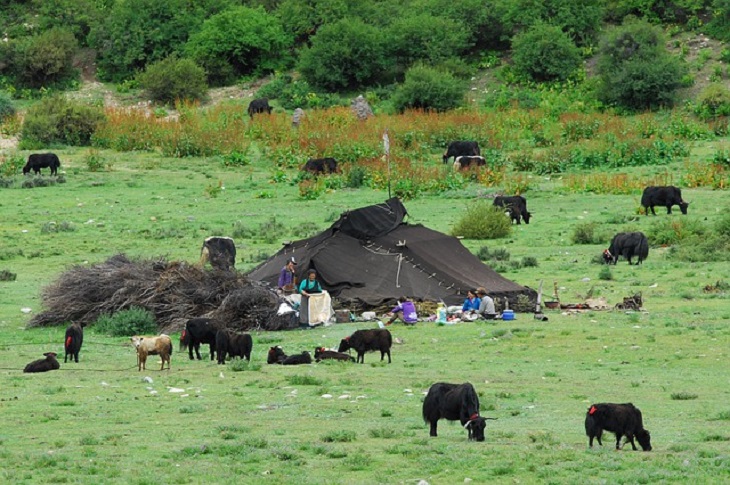
Bayi district, on which the analysis carried out by Chinese researchers has been based, It is an area close to the capital that is relatively accessible, medium altitude and one of the favorites for tourists who come to Tibet.
The results of the work carried out by scientists have shown that the ecological vulnerability of this district is severe and extreme in the southeast and north central zone., as well as in the glacial region.
In the year 2017, 25.61 Millions of tourists from all corners of the world visited Tibet, an amount twelve times greater than just a decade ago.


