

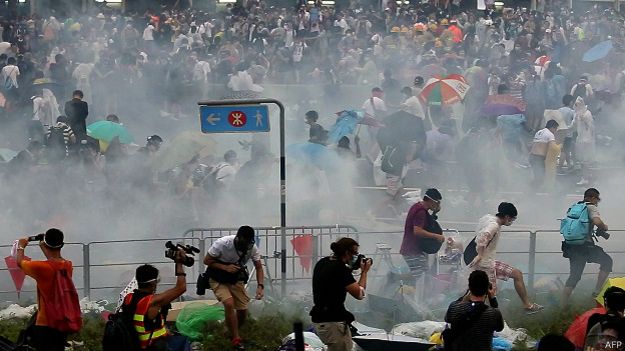
Hong Kong experiences days of tension. The dispute is over the way in which the next leader of this Chinese region will be chosen.. Y el movimiento "Occupy Central" takes on a role that bothers the central authorities in Beijing.
The elections are in 2017 But late last month China's government issued a resolution limiting who can run as a candidate..
Activists in favor of more democracy in the territory have demonstrated in the city in recent weeks. And they plan to occupy the financial district in protest.
This Sunday the police used tear gas to disperse pro-democracy protesters outside the government headquarters.
Read too: Jefe ejecutivo de Hong Kong declara "ilegal" occupation in protests
BBC Mundo explica el movimiento "Occupy Central".
¿Qué quiere "Occupy Central"?
"Occupy Central with Love and Peace" (Occupy Central with Peace and Love), conocido como "Occupy "Central", is a civil disobedience movement proposed by pro-democracy activists in Hong Kong.
Activists want political reform and democratic elections that meet international standards.
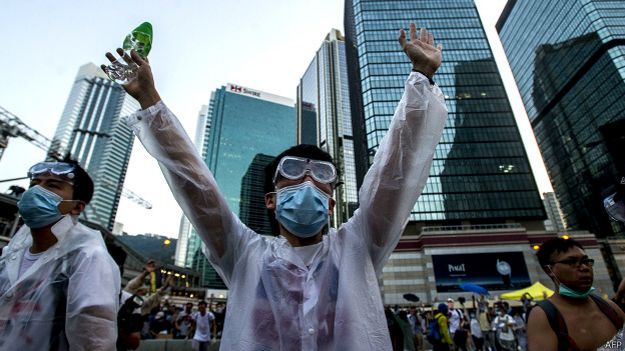
They plan for this week a non-violent occupation of the city's business area in response to the Chinese government's decision against holding open elections in 2017.
The movement ensures that it can mobilize some 10.000 people in the first phase of the demonstrations.
La campaña toma su nombre del movimiento "Occupy Wall Street", that in 2011 was launched in the United States to protest against social inequality.
Hong Kong is under Chinese rule, ¿Can protests make a difference?
Even the movement's organizers admit they are highly unlikely to influence China's central government..
However, Public protests play important role in Hong Kong.
Locals have freedom of expression and the right to protest, but they cannot directly elect their government.
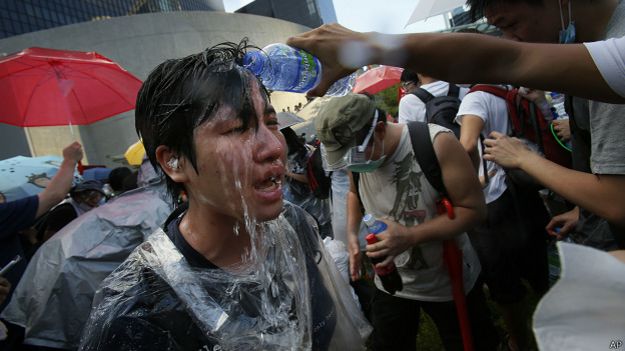
Many see taking to the streets as their way of forcing change..
Some demonstrations have been successful.
Una polémica ley de seguridad nacional conocida como "artículo 23" was proposed in 2002, but withdrew after huge protests.
Y el gobierno dio marcha atrás en las clases de "educación patriótica" after demonstrations against the decision.
Pero las demandas de "Occupy Central" they are more sensitive.
Demanding full democracy would radically change how Hong Kong is governed and Beijing would see it as a direct challenge to its authority..
¿There could be violence?
Organizers insist the protest will not be violent.
Demonstrations take place frequently in Hong Kong and are usually peaceful and well organized.
But protests have grown more combative over the years as Hong Kong politics have become more polarized..
In recent years there have been some clashes between pro-democracy protesters and those who support the central government in Beijing..
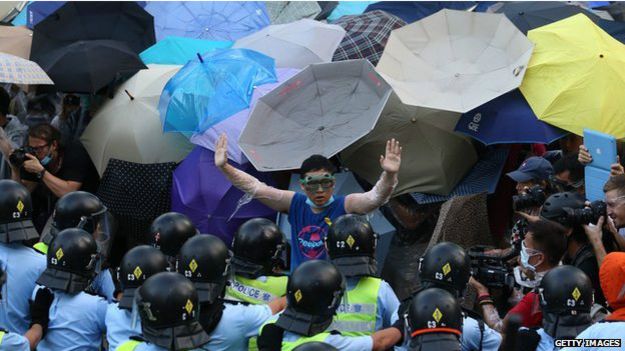
Protesters have attempted to storm government buildings.
On Saturday the police managed to clear the city government headquarters, after student protesters broke into the building overnight Friday and refused to leave.
In July, 500 personas fueron arrestadas por una reunión ilegal después de organizar una sentada prodemocracia que fue visto como un ensayo para "Occupy Central".
The protest was non-violent although some people suffered minor injuries when the police removed them from the scene..
Some critics fear organizers will not be able to control the crowd.
¿What Hong Kong people think?
There is a wide range of opinions.
Demonstrations on both sides have brought together thousands of people, but those in favor of the government are less common.. And local media have said that some people have been paid to attend.

Hong Kong is a business-minded city, and many are reluctant to take part in anti-government protests or upset Beijing for fear of hurting the economy..
However, A significant number of people want more democracy and have expressed anger at China's decision, arguing that it offers no real choice..
¿Who are the key actors?
The main organizers supporting the movement are Benny Tai, a law professor, Chan Kin-man, professor of sociology and Chu Yiu-ming, a church minister.
They are considered moderate figures in the movement in favor of more democracy..
"Occupy Central" It is supported by political parties as well as student groups.

It has not always been a unitary movement.
However, Beijing's decision seems to have brought together different people, that consider the restrictions on who can be a candidate in the elections of 2017 as undemocratic and unacceptable.
The main actors opposed to the protests are the authorities in Beijing and officials in Hong Kong.
Las agrupaciones políticas partidarias de Pekín y con un espíritu de fomento de los negocios suelen ser contrarios a "Occupy Central", and several groups opposed to the movement have also been formed.
¿What worries China??
The Chinese Communist Party does not want a movement to be perceived as a challenge to its authority.
President Xi Jinping has consolidated power since taking office in 2013 and appears to have taken a harder line against dissent.
China has been concerned about rising political tensions and anti-Chinese sentiment in Hong Kong.

Los medios estatales han acusado a "fuerzas externas" de entrometerse en los asuntos de Hong Kong y de fomentar "sentimientos separatistas".
Se ha especulado sobre si China se involucraría en una ofensiva contra "Occupy Central" if you are not happy with the way local authorities are handling it.
However, It is thought that China would see this as a last resort, taking into account possible international and business repercussions.
Read too: ¿Why China doesn't want more democracy in Hong Kong?


